A proposal to let people access the State Pension up to three years early has raised new discussions across the UK. Here’s what has changed, what’s just a proposal, and how workers can get ready financially.
For many, the State Pension is a key part of retirement income. Even a small change in when payments start can greatly impact savings plans and how long people expect to work.
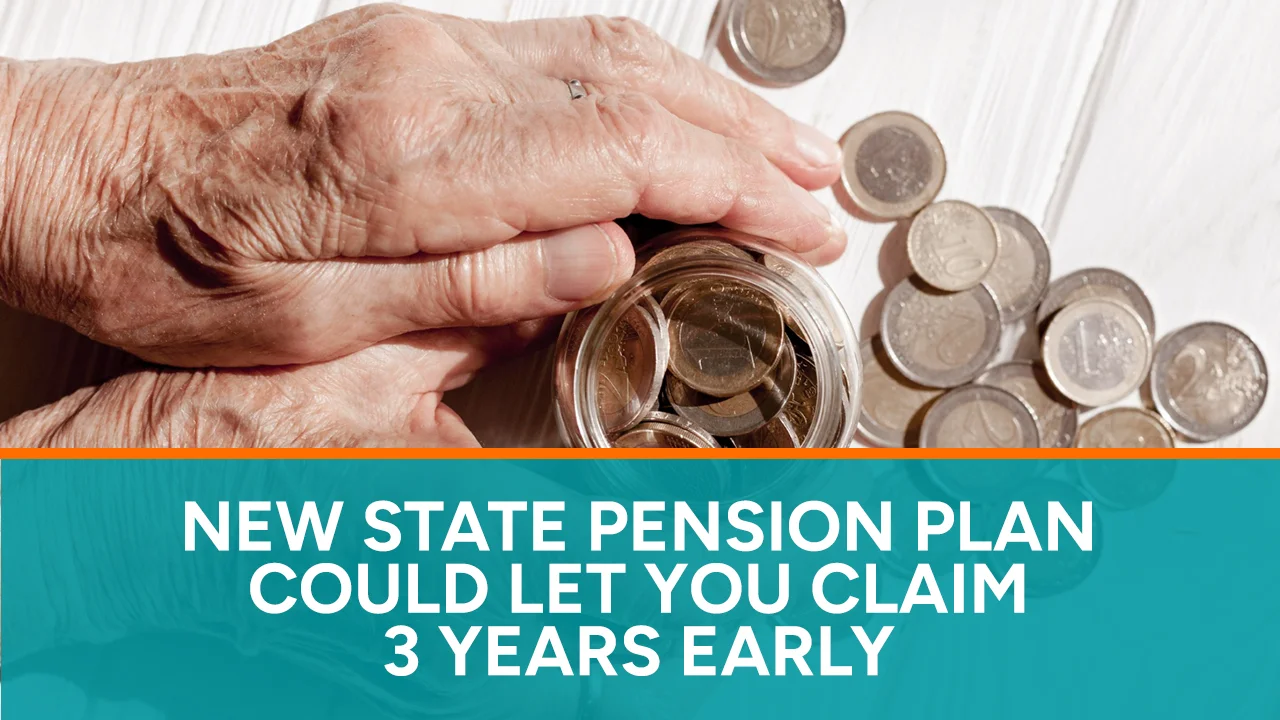
Pension provider Aegon has proposed allowing people to access the State Pension three years early. Under this plan, eligible workers could begin receiving payments before their official retirement age, but they would get a lower amount each week.
It’s important to note that this idea is not yet an official government policy. The Department for Work and Pensions has not approved early claims for the State Pension, and applications are not available.
Currently, the State Pension age is set to increase from 66 to 67. This change will begin in April 2026 and will last until April 2028. In the meantime, Aegon is advocating for a more flexible system to assist those who cannot work until their late sixties.
Is There Really a New State Pension Plan?
The term “new State Pension plan” refers to a proposal, not an official change in the law. Aegon suggests that individuals should be allowed to claim their State Pension up to three years earlier than their official age.
Kate Smith, Head of Pensions at Aegon, states that the current system creates a financial “cliff edge.” Right now, people cannot receive their State Pension before their designated age, even if health issues or caregiving duties make it hard for them to work.
Under Aegon’s proposal, people could choose to take their State Pension early but at a reduced amount. Aegon believes this could help those who can’t work full-time until they are 67 or 68 in the future.
However, this proposal is not an official update from the Department for Work and Pensions (DWP). The Government hasn’t announced early claims, implementation dates, formulae for reduced payments, or how to apply.
Currently, people can only receive their State Pension when they reach the official age. The Government allows them to delay their claim, which could increase future payments, but doesn’t allow them to claim early.
Therefore, anyone asking, “Can you claim State Pension three years early?” should know the answer is no under current rules. While this proposal might affect future policies, it does not create any rights today.
What State Pension Age Changes Are Happening Right Now?
The proposal for early access to the State Pension is still under discussion, but changes are already happening. The State Pension age will rise from 66 to 67 between April 2026 and April 2028. This change will happen gradually, based on each person’s birth date.
Some people will turn 66 and receive their pension shortly before moving to 67. Those born later will reach the full State Pension age of 67. This gradual change can be confusing because two people born just months apart may have different pension start dates. So, don’t assume your pension starts on your 66th or 67th birthday.
The best way to find out your State Pension age is to use the Government’s State Pension age checker, which shows when you’ll be eligible based on your birth date.
The Government has also planned to raise the State Pension age from 67 to 68 between 2044 and 2046. However, future governments can review and change this timetable. For now, the plan remains from 2044 to 2046.
In summary, the State Pension age will rise to 67 starting in April 2026 and ending by April 2028.
How Would State Pension Three Years Early Work?
The main idea behind early State Pension access is simple. Instead of waiting until the official age, a person can start getting a smaller pension up to three years earlier.
For example, if someone’s official State Pension age is 67, they might be able to claim it at around age 64. That’s why it’s often mentioned that people could get the State Pension at 64.
However, getting payments early means receiving a lower weekly amount. Aegon’s proposal suggests a reduced rate since the pension would be paid for a longer time. This is similar to some workplace pensions, where members can claim early but receive a lower amount because payments last longer.
Importantly, there is no official formula for calculating the proposed State Pension reduction. We still don’t know:
- How much would be deducted for early access.
- If the reduction lasts for life.
- If the lower amount gets annual increases.
- How early access affects Pension Credit.
- If National Insurance gaps limit access.
- If people can work while receiving payments.
- If the scheme applies to everyone or just some groups.
Any article claiming a specific reduction percentage is only guessing unless it’s clearly an example.
The best way to explain Aegon’s State Pension early access proposal is this: They want the Government to think about allowing claims up to three years early with a lower weekly payment, but the specific rules haven’t been set or approved yet.
Who Could Claim State Pension at 64?
Aegon suggests that flexibility in pension access should be widely available. This proposal specifically aims to help workers who struggle to stay employed until the official pension age.
Potential beneficiaries include:
- Manual workers facing physical strain
- People with long-term health issues
- Unpaid caregivers who can’t maintain regular jobs
- Older workers facing redundancy
- Workers in roles with few lighter-duty options
- Older employees needing to cut back on hours
- Individuals lacking enough private savings
Currently, we can’t answer the question, “Who can claim State Pension at 64?” because no government programme exists. However, Aegon’s plan suggests that someone with a State Pension age of 67 might access it early, starting at 64.
This is especially relevant for people in physically demanding jobs like construction, warehousing, and social care. Desk workers may have more flexible options, while those in heavy labour might struggle to find alternatives.
Unpaid caregivers often experience gaps in income and pension savings. While some get National Insurance credits, these don’t provide immediate income when they can no longer work.
Age-related redundancy is another issue. Losing a job at 63 or 64 can make it hard to find similar work, especially for those with health issues or specific skills. Early access to pensions could lessen the need to rely on savings before reaching the State Pension age.
However, granting early access to State Pension won’t automatically fix financial struggles. Those who need it most may also be the least able to handle lower payments in the long run.
Why Manual Workers Could Be Central to the Debate
A key argument for the proposal is the unfair impact of having one national pension age. The current system assumes everyone can work until the same age, but people’s working lives are very different. Someone who has spent years doing heavy work will retire very differently from someone who can switch to a part-time advisory job.
Many people are wondering if manual workers can claim their State Pension early. Right now, having a physically demanding job does not automatically allow for early State Pension payments. Some workplace pension plans have their own retirement rules, but these are different from the State Pension. Private plans may also offer options for health issues, depending on the policy.
The Aegon proposal aims to fix this issue by giving people a choice instead of setting different State Pension ages for each job. This flexibility might be easier to manage than having the Government decide which jobs are hard enough to qualify for early retirement. However, it could also lead low-income individuals to accept a smaller pension because they lack options.
So, the debate is about more than just personal choice; it’s also about whether that choice is truly free. If someone chooses to retire early because they want to, that’s different from retiring early due to chronic pain, caregiving, or unemployment. Policymakers need to think about whether additional protections should be in place for those who feel forced into early retirement.
Will Early State Pension Payments Be Reduced?
Under the Aegon proposal, early access to the State Pension means smaller payments. The idea is that if someone gets the benefit for a longer time, they get less each week. How much less will depend on the reduction rate chosen by policymakers.
For example, the full State Pension in the 2026/27 tax year is £241.30 a week, or £12,547.60 a year. However, not everyone gets this full amount; it depends on their National Insurance record.
If a policy cuts the pension by 5% for every year taken early, someone claiming three years early might see a 15% cut. This would mean a weekly payment of about £205.11 instead of £241.30. This is just a hypothetical example to show the importance of the reduction rate.
A small reduction could make early access appealing, but a large cut could lead to financial struggles later, especially with rising costs for housing, energy, and care.
So, for anyone wondering if early State Pension payments will be reduced, keep in mind two key points:
- A reduced rate is a key part of the proposal.
- No official reduction percentage has been set yet.
Policymakers also have to decide what will happen when someone claiming early reaches the normal State Pension age. Will their amount stay reduced, or will it go up at 67? Most sustainable early-retirement models include a long-term cut, but this decision is still pending for this proposal.
Could Early Access Increase Pensioner Poverty?
The main criticism of the proposal is that it may trade short-term help for long-term financial problems. Someone who stops working at 64 might appreciate a regular income right away. But if they get a lower State Pension for life, the total loss could be significant.
This risk is serious because those likely to claim early may have limited savings, broken job histories, unpaid caregiving duties, lower lifetime earnings, health issues, unstable housing costs, and few chances to work again.
Higher-income households might use early State Pension payments as one part of a diverse retirement plan. In contrast, low-income claimants may rely on the reduced payment for basic needs.
How this interacts with Pension Credit is crucial. Pension Credit helps those over a certain age with low income. Its qualifying age is tied to the State Pension age, which is increasing from 66 to 67.
If someone claims an early State Pension at 64 but can’t qualify for Pension Credit until 67, they could face a big income gap. However, if early claimants could get Pension Credit right away, some of the savings from reduced State Pension payments might go back through this support.
The Government also needs to think about the impact on Housing Benefit, Council Tax Reduction, social care assessments, taxes, and other benefits that depend on income.
Therefore, evaluating an early-access scheme requires more than just comparing weekly State Pension amounts. It must consider the overall tax and benefits system.
How Much Is the Full New State Pension in 2026/27?
The new State Pension is £241.30 a week for the 2026/27 tax year, totalling £12,547.60 a year. This is an increase from £230.25 a week.
However, “full” is key here. How much you actually receive depends on your National Insurance history and if transitional rules apply.
If your National Insurance record started after April 2016, you usually need 35 qualifying years to get the full rate. You need at least 10 qualifying years to receive any new State Pension.
For those who paid National Insurance before April 2016, it can be more complicated. For instance, being contracted out may affect your calculation. Some may need more than 35 years for the full rate, while others might have a higher protected payment.
Don’t assume you will automatically get £241.30 a week when planning your retirement.
Before deciding on retirement income, check your personal State Pension forecast. This will show you:
- Your estimated weekly amount,
- When you will receive it,
- Details from your National Insurance record,
- Ways to improve your forecast.
Remember, a forecast is an estimate, not a guarantee, but it’s a better basis for planning than just the headline full rate.
State Pension Qualifying Years and National Insurance Gaps
Your State Pension qualifying years come from National Insurance contributions made through paid jobs, self-employment, and certain credits.
You can earn credits when you aren’t paying National Insurance because you’re caring for a child, receiving certain benefits, or aren’t able to work. Eligibility varies, and credits aren’t always given automatically.
This is why people nearing retirement should check their National Insurance record before deciding to stop working. A gap in contributions doesn’t always mean you should pay voluntarily. Sometimes, missing years won’t help your pension forecast, especially with transitional State Pension calculations. In other cases, filling a gap could significantly increase your weekly payments.
People should check:
- Which tax years have gaps
- Whether they can fill those gaps
- If they should have received any credits
- The cost of voluntary contributions
- If paying would raise their forecast
- How long it may take to regain costs through higher pension payments
A qualifying year can greatly affect your pension over a long retirement, but everyone’s record is different.
For those considering taking their State Pension 3 years early, it’s crucial to understand the early-claim reduction and any reduction due to an incomplete National Insurance record. Without careful planning, this could result in receiving much less than the advertised State Pension rate.
State Pension at 64 Is Not the Same as Retiring at 64
It’s important to distinguish between the age you receive the State Pension and when you retire. People can retire whenever they can afford to. There’s no rule that says you must work until the State Pension age. However, quitting work doesn’t automatically qualify you to get the State Pension.
Currently, if someone retires at 64, they may need to cover the income gap with:
- Workplace pension income
- Personal pension
- Savings or investments
- Rental income
- Part-time work
- Business earnings
- Support from a partner
- Eligible benefits
This distinction is important because articles about the State Pension at 64 might suggest that 64 is the new retirement age. That is not Aegon’s proposal. Instead, 64 would be the earliest age to claim for someone whose normal State Pension age is 67, if the Government allows a three-year early-access window.
Some people might keep working while claiming early, depending on the final rules. State Pension income is generally taxable, but tax isn’t usually taken directly from the payment. Instead, HMRC may collect taxes through another pension or job’s PAYE code.
So, working while receiving an early State Pension could have tax effects. Claimants should look at their total taxable income, not just the State Pension amount.
Private Pension Age 57: A Separate Change in 2028
The new early State Pension plan should not be mixed up with the confirmed raise in the minimum pension age for private pensions.
Starting on April 6, 2028, most people will have to wait until age 57 to access private or workplace pension money without extra taxes. This new age rule applies to most pension plans, but some people may still access their pensions earlier if their plan allows it. Certain public-service schemes and ill-health rules may also allow earlier access under specific conditions.
These two changes are different: the private pension age change generally delays access from 55 to 57, while the Aegon proposal could allow people to access State Pension three years sooner.
For those born in specific years, the private pension age change may disrupt retirement plans. Anyone planning to use their pension at 55 to cover the gap before reaching State Pension age could face delays unless they qualify for an earlier access age.
Workers should check their own pension plans instead of relying solely on these general rules.
Could Phased Retirement Offer a Better Alternative?
Early State Pension access isn’t the only option for helping older workers move away from full-time jobs. A phased retirement plan can let someone gradually cut back their hours while receiving part of their pension. This helps keep some income, continue workplace pension contributions, and reduce savings withdrawals.
For instance, an employee might go from working five days a week to three days. They could use pension withdrawals to cover part of their lost salary and postpone their State Pension until the normal age.
However, not everyone can use phased retirement. Some employers don’t offer flexible roles, and certain jobs can’t easily be broken into shorter shifts.
Aegon suggests that employers help by creating:
- Flexible work options
- Age-friendly roles
- Phased retirement paths
- Adjustments for older workers
- Stronger pension plans
Employers should also remember their responsibilities regarding auto-enrolment when hours or earnings decrease. They need to check if an employee still qualifies for automatic enrolment, whether contributions are accurate, and if payroll follows pension rules.
For support with payroll and pension management, Clarkwell & Co.’s Payroll and Pension Auto Enrolment Services London can help employers track deductions, assess employees, and ensure compliance.
Why Budgeting Matters Before Claiming Any Pension Early
Getting paid sooner might seem attractive, but it’s important to compare this with a realistic long-term budget.
If someone is thinking about early retirement, they should list their essential and extra expenses separately. Essential costs include housing, utilities, food, transport, insurance, and healthcare. Extra expenses could be travel, hobbies, gifts, and entertainment.
It’s wise to explore different retirement scenarios:
- Retiring at 64
- Working part-time at 64 and fully retiring at 67
- Using private pension savings before the State Pension
- Delaying the State Pension
- Downsizing or changing housing
- Doing some freelance or consultancy work
Inflation is also a key factor. A budget that looks good today might tighten over 20 or 30 years of retirement.
Homeowners have extra considerations. Rental income can help in retirement, but landlords must factor in taxes, repairs, vacancies, loans, insurance, and changing rules.
This is a good time to mention Clarkwell & Co.’s Budgeting and Forecasting services in London, which can help individuals and businesses with cash-flow planning.
Readers with rental properties might find the Accountants for Landlords and Property Investors in the UK page useful, especially for evaluating if rental income can support them before receiving the State Pension.
Estate agents and lettings businesses looking at staff pension costs can check out our Accounting Services for Estate Agents and Lettings in the UK.
How Early State Pension Could Affect Income Tax
The State Pension is taxable income, but it usually doesn’t have tax taken out when you receive it. Whether you will owe tax depends on your total income for the year, which can include:
- State Pension payments
- Workplace or private pension income
- Salary from a job
- Profits from self-employment
- Taxable rental income
- Interest from savings
- Dividends
- Other taxable income
If your State Pension and total income go over your Personal Allowance, you may have to pay Income Tax. HMRC often collects tax from the State Pension by adjusting the PAYE code for another pension or job. If you don’t have a PAYE source, you may need to work with HMRC in another way or use Self Assessment.
An early-access policy might affect your tax planning. For example, if you receive the State Pension at 64 while still working, you might pay more Income Tax than expected because your salary and pension overlap. On the other hand, if you stop working before claiming the pension, you can use more of your Personal Allowance against your pension income.
Landlords and property investors should be careful, as taxable rental profits can push your total income over important thresholds. Always calculate rental income after deducting allowed expenses and follow the tax rules for property businesses.
For those needing help understanding how pension, work, property, and investment income affect taxes, Clarkwell & Co. Accountants in Central London offer support. Readers in West London can also visit the Accountants in Ruislip service page for local tax assistance.
What Should You Do While the Proposal Is Debated?
The new plan to claim State Pension early hasn’t been approved yet. So, people should not make important retirement decisions based on the idea that it will become a law. Instead, they should focus on using the current rules.
Check your State Pension age.
Check your State Pension date using the Government’s tool. Don’t just assume the pension age is 66 or 67, as the change is happening gradually.
Review your State Pension forecast.
Your State Pension forecast shows how much you might get and whether you can improve your National Insurance history.
Examine your National Insurance record.
Look for gaps, incorrect entries and periods when you might have qualified for credits.
Contact your private pension providers.
Ask each provider about:
- current fund value;
- projected retirement income;
- earliest access age;
- protected pension age rights;
- fees and charges;
- available withdrawal options;
- ill-health provisions;
- beneficiary nominations.
Build a retirement cash-flow forecast.
Estimate expenses, taxes, and income for different retirement dates. Consider inflation and account for unexpected costs like home repairs, vehicle replacement, and family support.
Review workplace pension contributions.
Starting contributions earlier can allow for more flexibility later. Employers should also make sure their pension auto-enrolment plans follow the rules.
Seek regulated financial advice where appropriate.
Accountants can assist with taxes, cash flow, and financial records. However, for pension transfers and investment advice, you may need a licenced financial adviser.
These actions protect you, regardless of whether the Government implements new State Pension rules for early retirement.
Arguments Supporting the New State Pension Plan
Supporters think early access to pensions could make the system fairer and more connected to real life.
First, it can help people who can’t work due to health issues. A universal retirement age seems simple, but it ignores differences in health, jobs, and life expectancy.
Second, it may lessen the financial struggles of older workers who lose their jobs. Those laid off just before the pension age might deplete their savings while looking for work.
Third, early access could help unpaid caregivers. People who leave their jobs to care for family members may have little income even though they provide vital support.
Fourth, it could lead to an easier transition to retirement. Instead of suddenly stopping full-time work, people could cut back hours and earn money along with a smaller pension.
Finally, this policy would offer personal choice. Adults could decide if getting less money sooner fits their health, family, and financial needs.
These points show why early access to pensions will remain part of the retirement discussion.
Arguments Against Claiming State Pension Early
Critics argue that the policy could create new risks and inequalities.
First, early claimants might end up with lower incomes. Those who live many years after retirement may lose more than they gain by getting payments sooner.
Second, low-income workers might feel pressured to claim early. A policy that seems flexible could become a necessity for those without savings or jobs.
Third, the system might be hard to explain. State Pension rules are already complicated for people with pre-2016 National Insurance records. Adding reductions for early access could complicate retirement choices even more.
Fourth, the policy could affect means-tested benefits unpredictably. The Government needs to decide if early claimants could still access Pension Credit and related support.
Fifth, an early-access option might reduce employers’ motivation to improve working conditions for older workers. Employers might believe struggling employees can just leave and take a reduced pension.
Finally, the policy could have significant effects on public finances. Even if weekly payments were lower, paying millions of claims early would impact government spending and cash flow.
Thus, the issue is not just whether people should claim State Pension early. Policymakers must determine if the reduction is fair, clear, and financially sustainable.
Frequently Asked Questions
Can you claim State Pension three years early now?
No, you cannot claim the State Pension before your official age. The idea of claiming early is a proposal from Aegon, not a current government programme.
Is State Pension age already 67?
No, the age will increase from 66 to 67 between April 2026 and April 2028. Your State Pension age depends on your birth date.
Could the proposal allow State Pension at 64?
Yes, under this proposal, someone with a State Pension age of 67 might be able to claim it at around 64.
Would early State Pension payments be lower?
Yes, the proposal includes lower weekly payments, but no official formula for this has been approved yet.
Would the reduction last for life?
This is not confirmed. Any final decision will need to clarify whether the reduction is permanent or changes when the person reaches the normal age.
Who would benefit most?
This proposal mainly helps manual workers, unpaid carers, and those in poor health who cannot work until 67 or 68.
Can manual workers currently claim State Pension early?
Not just because they do manual work. They might have different pension rights or options based on their individual situations.
What is the full new State Pension in 2026/27?
The full rate will be £241.30 a week, totalling £12,547.60 a year. The amount you receive depends on your National Insurance record.
How many qualifying years do I need?
People with records after April 2016 need at least 10 qualifying years for any pension and 35 years for the full rate. Rules vary for those with earlier records.
Is private pension access also changing?
Yes, the minimum age for most private pensions will increase from 55 to 57 on April 6, 2028, though some exceptions may apply.
Can I work while receiving the State Pension?
Yes, you can work after reaching State Pension age and still receive your pension. Your total income may be taxable. How this works under an early-access scheme is not yet clear.
Does the State Pension count as taxable income?
Yes, it counts as taxable income even though tax is not directly deducted from the payment.
Could early access affect Pension Credit?
Yes, but details are not available. How early access interacts with Pension Credit is a key issue for the government to address.
Should I pay voluntary National Insurance contributions?
Not automatically. Check if paying for a missing year would increase your State Pension. Seek advice before making a payment.
Has the Government confirmed a move to State Pension age 68 in the 2030s?
No, there is currently no such plan. The law states the rise from 67 to 68 will happen between 2044 and 2046, but future reviews might suggest changes.
Plan Around Facts, Not Headlines
The idea of receiving the State Pension three years early is appealing, especially for those struggling to stay employed. Three years can be a big financial and physical hurdle.
However, it’s important to understand that this is just a proposal, not a policy. The Government is raising the State Pension age to 67 but hasn’t offered a universal early-access option.
So, continue to plan your retirement using the current rules. Check your State Pension forecast, review your National Insurance record, look at when you can access your private pension, and create a realistic budget.
Business owners should also assess their employees’ pension plans. Older workers may request reduced hours, flexible schedules, or phased retirement. It’s crucial to have correct payroll and auto-enrolment processes as work patterns change.
If you have a business, investments, or rental properties, include all income sources in your retirement planning. You can’t separate your pension decisions from your job earnings, dividends, rental income, savings, and household expenses.
Clarkwell & Co., Chartered Certified Accountants in London, can help with budgeting, tax planning, payroll, auto-enrolment, and accounting for landlords. However, for investment and pension advice, consult a qualified financial adviser.
Flexibility Could Help, but Details Matter
The new State Pension plan raises a key question: Should everyone wait until the same age to receive their pension, even when health, work, and caregiving situations vary widely?
Allowing early access could give people more choice and dignity. It could help manual workers, caregivers, and those with health issues avoid financial struggles before reaching State Pension age.
However, flexibility comes with risks. Early access could lead to lower payments, leaving some people short on income later in life. Those who need early access the most may be the least able to handle a permanent income cut.
A fair policy should include clear reduction rates, strong protections, straightforward tax rules, and careful coordination with Pension Credit and other benefits.
For now, the situation is clear: The State Pension age is rising from 66 to 67, but claiming it three years early is not yet an option.
While this proposal could spark future discussions, UK workers should wait to adjust their retirement plans until the Government decides on this idea and shares specific rules.