Have you looked at the tax code on your latest payslip? It may seem like a mix of numbers and letters, but it affects how much Income Tax is taken from your pay each week. If it’s wrong, you could pay much more than needed or build up a tax bill that HMRC could collect later.
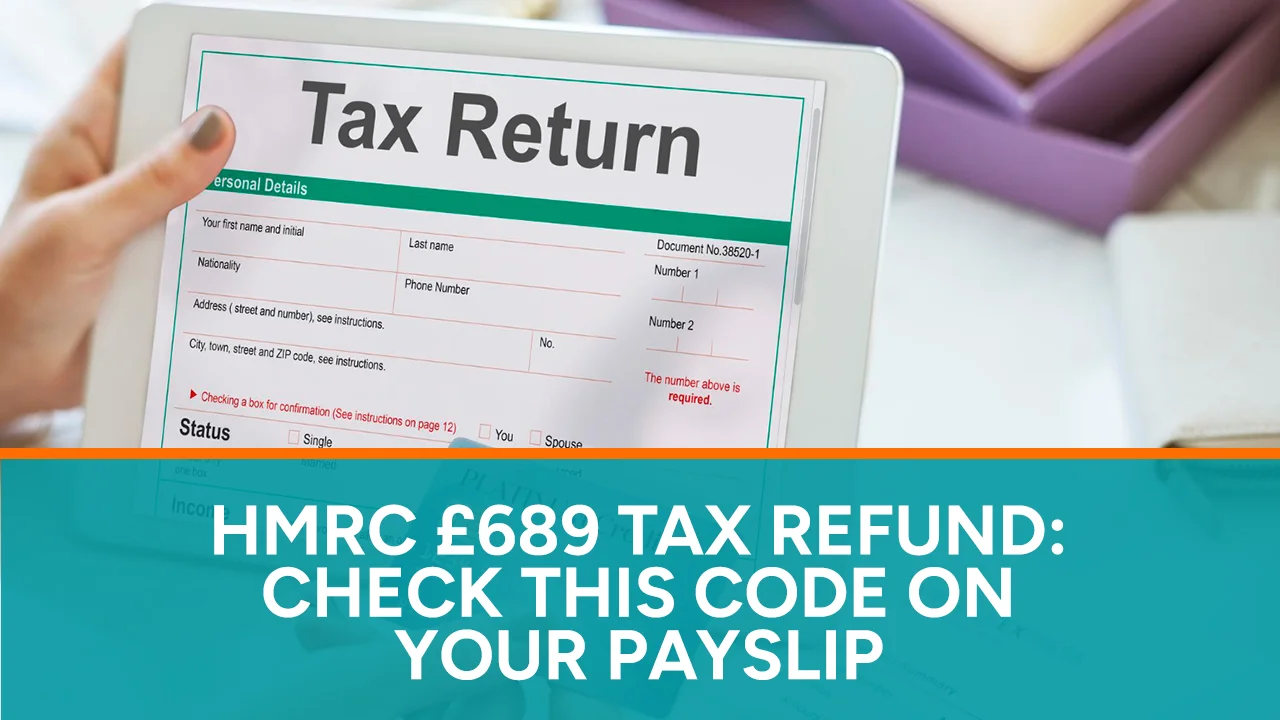
Recently, reports about a £689 tax refund from HMRC have caught a lot of attention. However, this amount isn’t a fixed payment or guaranteed refund. It’s based on research showing how much people with incorrect tax codes have overpaid on average.
Still, it’s important to check your tax code. A quick check with HMRC can show if your employer is taking out too much tax. It can also help fix any mistakes about your job, pension, or benefits before they get worse.
Note: This article shares general information and is not personal tax advice. Your correct tax code depends on your income, job, pensions, benefits, and situation.
The £689 Headline: Refund Opportunity or Tax Myth?
Let’s clarify a common misunderstanding. There is no special tax code that gives you £689, and HMRC has not announced a tax refund for all UK workers.
This £689 comes from a Canada Life survey published in April 2024. It found that 31% of adults who checked their tax code had been on the wrong one at some point. Among those with errors, 75% said they overpaid tax, with an average overpayment of £689.
When people ask if they can claim a £689 tax refund from HMRC, the correct answer is: maybe, but only if your PAYE records show you paid too much Income Tax. Your refund could be less than, more than, or even nothing at all.
Think of the £689 as a prompt to check your tax, not proof that HMRC owes everyone this amount. A real tax refund depends on the difference between the tax deducted and what you should have paid.
This distinction is important because misleading refund claims can lead people to file unnecessary requests, share private information with unregulated agents, or fall for scams. Instead, use your official HMRC account, the HMRC app, or direct government contact to check your tax situation.
Why One Small Payslip Code Controls Your Take-Home Pay
With Pay As You Earn (PAYE), your employer or pension provider takes out Income Tax before paying you. Your tax code tells them how much tax-free income you can have when they calculate the deductions.
If your tax code is old or incomplete, it can lead to wrong deductions throughout the year. If too much tax is deducted, your monthly pay decreases. If too little is deducted, you might get extra money now but later face a tax bill.
An incorrect tax code can be costly, even if the mistake seems small. For example, paying £40 too much each month totals £480 over a year, while underpaying £100 monthly could mean owing £1,200 later.
HMRC advises taxpayers to check they are paying the right amount of tax. They recommend checking your first payslip after starting a new job and looking into any tax issues.
Your employer uses the tax code from the PAYE system, but they don’t determine your Personal Allowance or adjustments in your code. So, talking only to payroll may not fix issues with HMRC records.
A warning from HMRC about payslips should not scare you into thinking every unusual code is wrong. Instead, it should help you understand your tax code and check if the information matches your situation.
Where to Find the Tax Code You Need to Check
Most employees can find their tax code on their weekly or monthly payslip. Look for titles like “tax code,” “PAYE code,” or “tax basis.” You can also find it on a P45, P60, pension statement, or PAYE coding notice.
If you use digital payslips, check the detailed version instead of just the bank payment notification. Your bank statement shows only your net salary and doesn’t include your tax code or how your payroll calculated your pay.
You can check your tax code via HMRC’s online Income Tax service. This service lets you view your Personal Allowance, estimated income from jobs and pensions, expected tax, recent code changes, and employment or pension details.
The HMRC app is another handy option. Users can see their tax code, income, benefits, and employment history through the app.
To check your tax code online:
- Sign in to your Personal Tax Account or the HMRC app.
- Go to the PAYE or Income Tax section.
- Select the current tax year.
- Review your employment and pension income estimates.
- Compare the displayed code with your latest payslip.
- Confirm that benefits, allowances, or adjustments are correct.
Don’t stop after matching the code on your payslip with the online code. They might show the same code but could be based on outdated information. For example, HMRC might still have records from a previous employer or an incorrect income estimate.
Understanding the 1257L Tax Code Without the Jargon
The 1257L tax code is the standard code for many employees and pensioners with one main PAYE income and the normal Personal Allowance. In the 2026/27 tax year, HMRC still lists 1257L as the emergency code for employees. The Personal Allowance is £12,570.
The number 1257 shows the tax-free amount in the code, excluding the last digit. Thus, 1257 indicates £12,570 of tax-free income. The letter “L” means you qualify for the standard tax-free Personal Allowance.
So, what does 1257L mean on your payslip? It usually means your payroll is applying the standard Personal Allowance to that job or pension. However, 1257L might not be correct for everyone earning over £12,570.
Your tax code may be different because of:
- Taxable benefits from your employer
- Untaxed income
- Multiple jobs
- A workplace pension and State Pension
- Unpaid tax from earlier
- Marriage Allowance
- Job expenses or professional fees
- An adjusted Personal Allowance
- Income above the allowance taper threshold
- Changes during the tax year
For example, someone with a company car may see a lower tax-free amount in their code due to the car being a taxable benefit. On the other hand, someone eligible for extra expenses may have a higher code.
So, seeing a code other than 1257L doesn’t mean you will get a tax refund. The key question is whether the code matches your income, benefits, reliefs, and any unpaid tax.
W1, M1 and X: Emergency Codes That Need Attention
An emergency tax code often happens when you change jobs or when HMRC and your employer lack the information to calculate your tax correctly.
HMRC has guidelines for emergency codes, which may end in:
- W1: for weekly paid workers
- M1: for monthly paid workers
- X: for varying pay dates
- NONCUM: based on payroll software
You might see tax codes like 1257L W1, 1257L M1, or 1257L X. The “1” is a number, not the letter “I,” which can be confusing on small payslips.
The W1, M1, and X codes mean your tax is calculated based only on the current pay period instead of looking at the whole tax year. This is called a non-cumulative calculation.
While this method may be temporary, it can lead to incorrect tax amounts if your income is varied, if you started mid-year, or if you have used part of your Personal Allowance.
Can an emergency tax code cause you to overpay? Yes, it can also cause underpayment depending on your earnings and deductions. The emergency code alone doesn’t confirm that any money is owed.
You should check your code carefully if:
- You’ve just started a new job
- You didn’t provide a P45
- You filled out a starter checklist
- You moved from benefits to a job
- You started receiving a company benefit
- You began drawing a pension
- You have overlapping jobs
- Your previous employer is still listed as active
Once HMRC gets the right information, it might give you a new code, which your employer can use for future payroll. Sometimes, PAYE automatically fixes any overpayment through your wages within the same tax year.
BR, D0, D1 and NT: Codes That Look Alarming
Short tax codes can seem confusing because they look different from 1257L. However, they can be valid, especially if you have multiple income sources.
The BR code tells your employer or pension provider to tax all income from that source at the basic rate, without your Personal Allowance. This often happens with a second job since your allowance is used for your main job.
The D0 code means all income from that source is taxed at the higher rate, while D1 means it is taxed at the additional rate. NT means no tax is taken from that source.
Before questioning any code, check your total income. A BR code may be incorrect if it appears on your only job, but it could be correct for a smaller second job. Likewise, D0 or D1 may be fair if your main income already uses your allowances.
An NT code can be valid in certain cases, but investigate if you’re confused about no tax being deducted. Scottish taxpayers might see an S prefix, while Welsh taxpayers may see a C prefix. Tax rates and bands can differ from those in England and Northern Ireland.
The main point is clear: don’t judge a tax code by its appearance. Look at all your jobs, pensions, taxable benefits, and other income before assuming you have overpaid Income Tax.
Why Has My Tax Code Changed Suddenly?
One common question taxpayers ask is, “Why did my tax code change?” Sometimes the answer is simple. HMRC may have received new information from your employer, pension provider, or benefits record.
For example, starting a new job can cause a temporary mismatch in your payroll information. If your new employer doesn’t get the correct leaving details, they may have to operate on an emergency tax code until everything is sorted out.
Your tax code may change for several reasons, including:
- An increase or decrease in your salary estimate
- Starting or stopping taxable workplace benefits
- Starting a second job
- Leaving your job
- Starting to receive pension income
- Paying back an earlier underpayment
- Changes in allowable employment expenses
- Transferring part of an allowance through Marriage Allowance
- Your employer reporting incorrect information
- HMRC estimating untaxed savings or income
- Your Personal Allowance being restricted
HMRC’s current-year service lets you see if your code has changed and helps update details about your job, pension, or estimated income that could affect your tax calculation.
A changed code doesn’t always mean HMRC made a mistake. It could be a necessary adjustment to collect the right tax by April 5. That’s why it’s important to check the coding calculation instead of just comparing the new code to last year’s.
At Clarkwell & Co., we find that workers with multiple income streams need a more detailed look than just a basic payslip. For instance, a contractor might earn a salary from a limited company, have income from another job, and also receive investment income. A fashion entrepreneur might combine PAYE earnings with dividends or freelance work.
Our Specialist Accountants for IT Contractors and Freelancers in the UK help professionals understand how PAYE, limited company income, expenses, and tax obligations work together. Similarly, our Accountants for Fashion and Apparel Businesses in the UK support founders, designers, and retailers whose income comes from various sources.
How to Check If My Tax Code Is Wrong
To check if your tax code is wrong, start by looking into the information it’s based on. Just seeing a different code from a coworker doesn’t help, as your situations may vary.
First, look at your latest payslip and compare it with your HMRC Personal Tax Account. Make sure the employer’s name, estimated annual pay, benefits, pension income, and any other adjustments match.
Next, collect these documents if you have them:
- Your latest payslips
- Your P60 from the previous tax year
- A P45 from any recently ended employment
- Your HMRC coding notice
- Details of taxable benefits
- Pension statements
- Employment expense records
- Previous P800 calculations
- Information about other jobs or income
Then work through this checklist:
1. Check Employment Records
Ensure HMRC hasn’t listed the same job twice. Confirm that jobs you’ve left are marked as ended and that your current job has the right start date.
2. Review Annual Income Estimate
An incorrect income estimate can affect your allowances and tax rates. Update it when the online service lets you.
3. Check Taxable Benefits
Benefits like company cars and private medical insurance can lower your tax-free amount. Make sure you aren’t still being charged for an old benefit after you’ve stopped receiving it.
4. Verify Allowance Allocation
If you have multiple jobs or pensions, HMRC may assign your Personal Allowance to only one. Make sure this allocation is correct and not duplicated.
5. Look for Emergency Markers
Codes like W1, M1, X, or NONCUM may mean the code is being applied without considering previous pay periods.
6. Compare Total Tax Amounts
Two codes may look different but still result in the same annual tax. Check the tax deducted against your total liability.
HMRC offers a PAYE tax calculator for the current tax year to help you check Income Tax for a specific pay period. Complex situations with multiple income sources may need a more detailed calculation.
What to Do If I Am on the Wrong Tax Code
Once you notice an error, the next step is to address being on the wrong tax code. Usually, update the mistake using HMRC’s online service or contact them directly.
Don’t ask your employer to change or guess your code. Payroll must use the code given by HMRC under PAYE rules. Your employer can fix their own records, but HMRC decides your tax code.
When reporting a problem, clearly state:
- Which job or pension is affected
- The code currently in use
- Why you think it’s wrong
- Your expected yearly income
- When you started or left the job
- If you supplied a P45
- Any incorrect benefits or deductions
- If another employer is using your allowance
HMRC might update your record and send a new code to your employer. Check your next payslip to confirm that the new code is applied.
If the change happens during the tax year, the PAYE system may fix an overpayment through your later wages. This could result in a higher payment without needing a separate refund request.
However, don’t assume that one revised payslip solves everything. Review your year-to-date pay, taxable pay, and Income Tax figures to ensure they look reasonable.
For simple coding issues, many taxpayers can resolve them directly with HMRC. But professional help is useful for complex cases involving past debts, conflicting records, multiple employers, formal enquiries, or large adjustments.
Clarkwell & Co.’s HMRC Investigation Service in London helps individuals and businesses with HMRC enquiries, record reviews, and tax disputes. A coding issue doesn’t automatically mean an investigation, but unresolved gaps may need careful evidence and communication.
How to Claim Back Overpaid Tax From HMRC
To claim back overpaid tax from HMRC, start by identifying which tax year is affected and how the overpayment happened.
For the current tax year, fixing your tax code might help adjust the amount through your salary or pension. If it’s an earlier year, HMRC may check your records and send you a P800 tax calculation.
Use the official government refund tool to learn the right process for your case. HMRC covers several reasons for overpaid Income Tax.
You may need to provide:
- Your National Insurance number
- Employer PAYE details
- Pay and tax information
- P45 or P60 details
- Employment expenses evidence
- Pension information
- Secure bank details
- Benefits or allowances information
Always follow an official calculation for an HMRC overpaid tax refund. Avoid paying a third party to submit your information unless you’ve chosen a trusted adviser and understand their fees.
Some refund companies take a percentage of your repayment or change how HMRC sends your money. Always read the terms before letting anyone act on your behalf.
Be cautious of unsolicited messages claiming your PAYE tax refund is waiting. Scammers often create urgency and ask for bank details or fees.
Instead of clicking links in messages, log in directly to the official HMRC service. Genuine refunds never ask for online banking passwords or require an upfront payment.
The P800 Letter: Refund Notice or Tax Bill?
After the tax year ends, HMRC may check information from employers and pension providers. If they find that too much or too little tax was paid, they might send a P800 tax calculation.
The P800 letter explains your income, allowances, tax paid, and whether you will receive a refund or owe money. Eligible taxpayers can use HMRC’s online service to check last year’s calculation and, if allowed, claim their refund or pay any owed amount.
Read the P800 carefully. It can have mistakes if HMRC:
- Counts an employment job twice
- Misses a P45 update
- Uses the wrong pay amount
- Adds an outdated benefit
- Omits allowable relief
- Records the wrong pension amount
- Misallocates allowances
If the P800 says HMRC will send a cheque, it should arrive within 14 days of the letter’s date. If multiple years are involved, HMRC may send one cheque for the total amount.
Some repayments can be claimed online, if mentioned in the letter. Follow the provided instructions instead of relying on general timeframes from news sources.
The time it takes to receive an HMRC tax refund varies. It depends on whether the refund is processed through payroll, claimed online, sent automatically, or delayed while HMRC checks information.
Do not ignore a P800 that says you owe money. HMRC may adjust your future tax code to collect this underpayment. Typically, they will collect tax owed on a P800 through a code adjustment.
Am I Owed a PAYE Tax Refund? Common Warning Signs
You can’t answer the question “Do I deserve a PAYE tax refund?” by just looking at a tax code. However, some events can make it more likely that you’ve overpaid, so it’s worth checking closely.
You may have paid too much tax if:
- You started a job part-way through the tax year
- You stopped working and had no further taxable income
- Your employer used an emergency code for several pay periods
- You had overlapping payroll records
- HMRC included a benefit you no longer receive
- Your Personal Allowance was allocated incorrectly
- You paid basic-rate tax on a low-paid second job despite unused allowances
- Your income estimate was significantly too high
- You were entitled to allowable employment expenses
- Payroll deducted tax after an incorrect starter declaration
- Your pension or employment records were duplicated
Meanwhile, you may have paid too little if:
- A second job used an allowance incorrectly
- A taxable benefit was missing
- HMRC underestimated your income
- Several income sources pushed you into a higher band
- An NT or low-deduction code was applied without justification
- A previous underpayment was not collected as expected
The HMRC tax code check that finds refunds can also reveal money owed. While this news may not be pleasant, finding out early can help you avoid a bigger bill later.
If you might face unexpected expenses that could impact your household or business cash flow, planning ahead is important. Clarkwell & Co.’s Budgeting and Forecasting Services in London can help business owners estimate future payments, understand cash needs, and get ready for tax obligations instead of waiting until the last minute.
Complex Income: When a Payslip Check Is Not Enough
A basic PAYE employee with one job and no benefits can quickly check their tax status. But modern work situations are often more complex.
You might get paid from your own company, freelance work, dividends, a pension, benefits, rental income, or investments. In these cases, your PAYE tax code only tells part of the tax storey.
For instance, a tech consultant might run a limited company and also take on a temp job. A creative worker in Shoreditch could earn a PAYE salary, freelance fees, and royalties. A fashion entrepreneur might receive a salary, dividends, and manage taxable benefits.
In these situations, just changing a tax code without a full review can shift the issue elsewhere. A bigger PAYE allowance might increase your monthly pay but lead to issues with Self Assessment if other income isn’t factored in.
Clarkwell & Co. employs expert accountants in Shoreditch who help freelancers, startups, landlords, and creative businesses throughout East London. Our Chartered Certified Accountants in Hackney assist individuals and businesses with payroll, tax returns, and compliance.
Investors and startup founders should know that PAYE codes are different from investment relief. Adjusting your tax code isn’t enough; you need to correctly claim any eligible investment relief. Our SEIS and EIS Tax Relief Services in London help qualifying companies and investors with applications, certificates, and compliance.
How to Correct an Incorrect HMRC Tax Code Safely
If you want to fix an incorrect HMRC tax code, use official channels and keep a written record of everything you submit.
First, log in to the official government website or HMRC app. Check your coding breakdown and update any job, pension, or income details as needed.
Second, keep copies of:
- Updated online information
- Relevant payslips
- Your P45 and P60
- Coding notices
- Letters sent to HMRC
- Notes from phone calls
- Reference numbers
- Refund calculations
- Revised payslips
Third, check your next payroll. A new code might not affect wages that have already been processed, so timing matters.
Fourth, look at your cumulative figures. Ensure the new deduction corrects past tax or only adjusts future deductions.
Finally, think about your overall tax situation. If you file Self Assessment, your final calculation should match PAYE deductions with other income and reliefs. Don’t claim the same relief twice, and don’t treat a temporary payroll change as final.
Be careful if someone unexpectedly contacts you claiming you have a £689 tax refund. Scammers often impersonate tax authorities to get you to act quickly.
Watch for these red flags:
- Requests for banking passwords
- Pressure to act quickly
- Strange website addresses
- Upfront fees for “release” or “administration”
- Messages from personal phone numbers
- Poorly written threats
- Requests for remote access to your device
- Exact refund promises without checking your income
Always access your tax account directly, not through unsolicited links.
Practical Examples: What Different Workers Might Find
Example 1: The Employee on 1257L
Sophie has one job and a regular salary. She receives no taxable benefits. Her payslip shows the 1257L tax code, and her HMRC account has one active employer with the right estimated salary. This code seems correct, but Sophie should check it regularly, especially after a pay rise or if she changes jobs. Just having the 1257L code doesn’t mean she will automatically get £689.
Example 2: The New Starter on 1257L M1
Daniel starts a new job but doesn’t have his P45 yet. His first payslip shows 1257L M1. This code is non-cumulative, meaning payroll only looks at this month’s earnings. Once HMRC gets the right info, they will send a cumulative code. Daniel’s future payslip will adjust the tax he owes for the year. His refund will depend on what he earned before; it won’t just be fixed at £689.
Example 3: The Second Job on BR
Aisha works full-time and has a weekend job. Her main job uses her Personal Allowance, while the weekend job uses BR. This setup is likely correct. If Aisha asked for 1257L for both jobs, she could get the allowance twice and not pay enough tax. So, having BR doesn’t mean her tax code is wrong.
Example 4: The Outdated Company Benefit
Oliver used to get private medical insurance through work, but that ended months ago. HMRC still considers it and has reduced his tax-free amount. After he updates HMRC with the details, they may change his code. If he overpaid taxes, the adjustment could come through payroll or as a repayment from HMRC.
Example 5: The Freelancer with Several Income Streams
Maya has a small PAYE salary from her limited company and also earns from dividends and freelance work. Her payslip tax code doesn’t show her total annual tax liability. She must look at all her income together. Though her PAYE deductions may seem high or low, her final tax position will depend on her complete tax return and available reliefs.
These examples highlight that understanding a payslip tax code requires more than just looking at the letters. Context is key to knowing if a code is correct.
Frequently Asked Questions About the HMRC £689 Refund.
Is HMRC giving every UK worker £689?
No, HMRC’s £689 tax refund isn’t for everyone. This amount comes from average overpayments found in surveys with people who used incorrect tax codes. You only get a refund if your tax shows you paid more Income Tax than needed.
Is 1257L the correct code for everyone?
No, 1257L isn’t for everyone. While many people receive the standard Personal Allowance through one main PAYE source, factors like other income or multiple jobs can result in different valid codes.
What does 1257L mean on my payslip?
1257L usually means your payroll is applying the standard £12,570 Personal Allowance to your job or pension. However, confirm that it fits your situation.
What do W1, M1, or X mean on a tax code?
W1, M1, and X are emergency markers. W1 applies to weekly pay, M1 to monthly pay, and X is used when pay dates are inconsistent.
Can an emergency tax code cause overpayment?
Yes, an emergency tax code can sometimes lead to overpayment, though it may also cause underpayment. Check your pay, past deductions, and employment history.
How do I check my tax code online?
You can check your tax code on your HMRC Personal Tax Account or the HMRC app. Look at your jobs, pensions, estimated income, allowances, and benefits, not just the code.
Should my employer correct my tax code?
Your employer uses the PAYE code from HMRC. They can fix payroll information they control, but HMRC usually decides your tax code.
What happens after HMRC changes my code?
After HMRC changes your code, your employer should apply the new code. If it’s cumulative, payroll might fix overpayments automatically. Check your next payslip.
How do I claim a PAYE tax refund?
To claim a PAYE tax refund, the process depends on why you overpaid and which tax year it concerns. Use HMRC’s official refund tool or follow the steps on your P800.
How long does an HMRC tax refund take?
Refund times can vary. A payroll adjustment might show up in a later payment, while a P800 can allow an online claim or indicate a cheque will be sent. If a cheque is promised, it should arrive within 14 days of the letter date.
Could checking my code reveal that I owe tax?
Yes, checking your tax code can show both overpayments and underpayments. HMRC might recover underpayments through a later code if applicable.
Can I claim an HMRC £689 tax refund without a P800?
Yes, you can report a current-year coding issue without waiting for a P800. Whether you get a repayment depends on your tax calculation. A P800 helps reconcile earlier PAYE records.
Is a BR tax code always wrong?
No, a BR tax code can be correct for a second job or pension if your Personal Allowance is used elsewhere. Investigate if it appears on your only income source without a clear reason.
How often should I check my payslip tax code?
Check your tax code when you start a new job, receive your first payslip of the new tax year, change jobs, start a pension, get a new benefit, take a second job, or see unexpected changes in your pay.
Check Early, Not After the Bill Arrives
Your tax code may take up only a little space on your payslip, but it can affect your deductions throughout the year. It’s easier to check it now than to sort through months of payroll records later if you get an unexpected bill or notice a drop in your salary.
The key step is not to look for a code “worth £689.” Instead, check if HMRC has the correct details about your jobs, pensions, benefits, and allowances.
Keep these points in mind:
- £689 is just an average from a survey, not a guaranteed amount.
- Code 1257L is common, but it may not be right for everyone.
- W1, M1, and X mean you’re on an emergency or non-cumulative basis.
- BR, D0, and D1 can apply to extra income.
- A wrong tax code can lead to overpayment or underpayment.
- Fixing a current-year code might change your payroll.
- Problems from earlier years may lead to a P800 form.
- Use official HMRC channels instead of trusting unsolicited refund messages.
- Complex income might need a full tax review.
At Clarkwell & Co. Chartered Certified Accountants, we help employees, contractors, freelancers, directors, startups, and established businesses in London and the UK. If you need help understanding a PAYE issue, organising records for HMRC, or planning for future tax payments, our professional review can help clarify your situation.
Spending a few minutes today to check your HMRC tax code can protect your future income, find an Income Tax overpayment, or help you get ready for any taxes you still owe. Check your code, verify the information, and take action before a small issue turns into a bigger financial problem.