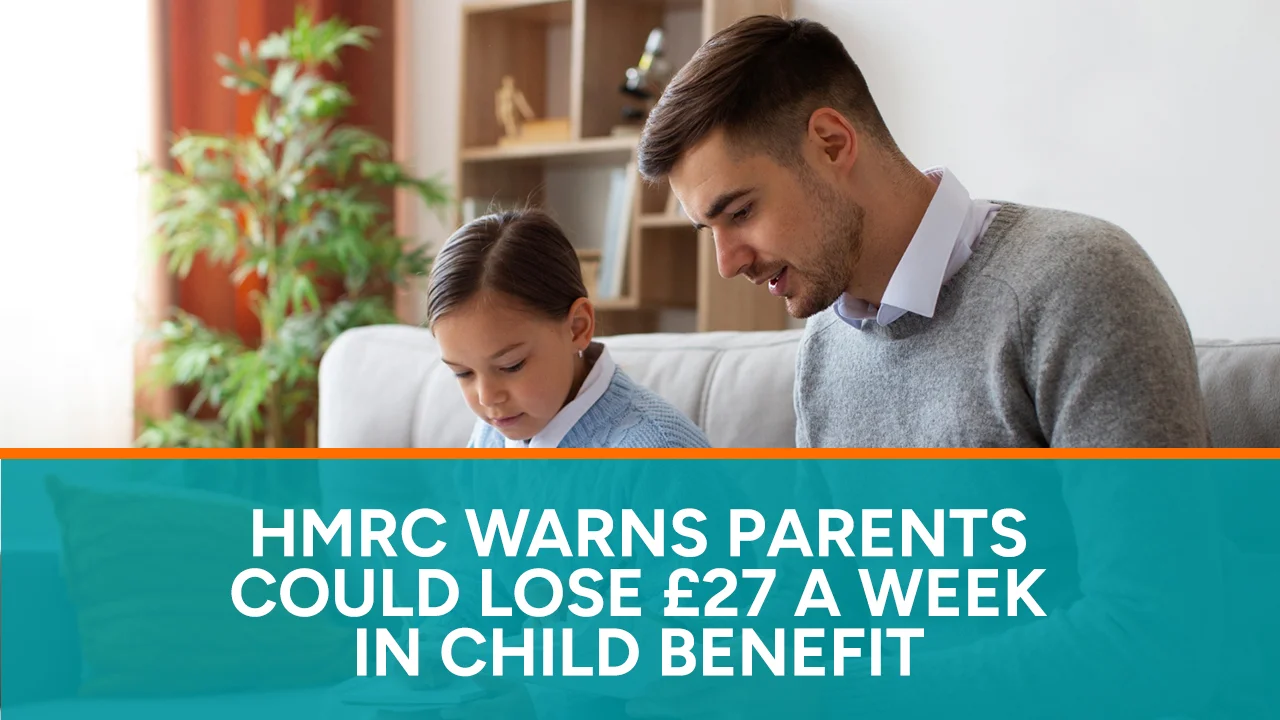
For many families in the UK, Child Benefit payments are important. They help cover school costs, food, transport, uniforms, childcare, and daily expenses. So, when HMRC warns parents they might lose £27 a week in Child Benefit, it’s essential to pay attention.
The latest HMRC warning is especially crucial for parents of teenagers. Many families think the Child Benefit stops when a child turns 16, but that isn’t always true. In many cases, parents can keep receiving Child Benefit until their child turns 20, as long as the child stays in approved education or training.
Why HMRC Is Warning Parents Now
HM Revenue and Customs (HMRC) reminds parents to update their claims if their teenager is still in education or training after turning 16. This is important because the Child Benefit doesn’t always continue automatically after age 16. If parents don’t inform HMRC of their child’s plans, payments may stop.
According to the GOV.UK, Child Benefit is available for children under 16 or under 20 if they are in approved education or training. Only one person can claim for each child, and there’s no limit on the number of children in a claim.
This warning is about an existing rule, not a new benefit. If your child is 16, 17, 18, or 19 and still studying or training in a qualified programme, you may still qualify for Child Benefit payments.
Timing is crucial. Child Benefit may stop automatically on August 31 after your child turns 16 if HMRC hasn’t been informed about their education or training. GOV.UK confirms that payments will stop if the child leaves education or training, if parents don’t notify HMRC, or if the education or training doesn’t qualify.
For families already facing rising costs, missing this deadline can add unnecessary stress. That’s why this HMRC Child Benefit warning should not be ignored.
How Much Child Benefit Parents Could Lose
The main point is clear: For the 2026/27 tax year, Child Benefit is £27.05 a week for the eldest child and £17.90 for each additional child, according to GOV.UK.
If payments stop, a parent could lose about £1,406.60 a year for their eldest child and around £930.80 for each additional child. Families with multiple children could face even higher losses.
The £27 a week in Child Benefit may seem small, but it adds up to a significant amount over a year. It can help pay for school clothes, transport, food, educational supplies, phone bills, or sports clubs.
Child Benefit is usually paid every four weeks, so parents should think about how it affects their monthly budget. These payments are often a regular part of a family’s cash flow.
For parents who run their own businesses or work freelance, it’s crucial to understand how family benefits relate to tax planning. Consulting accountants who know both family finances and HMRC rules can be very useful.
When Does Child Benefit Stop in the UK?
When does Child Benefit stop in the UK? Child Benefit usually ends when a child turns 16, unless they are in qualifying education or training.
Parents need to inform HMRC when their child turns 16. If HMRC doesn’t get this update, Child Benefit may stop at the end of August, even if the child is still in school or college.
To keep Child Benefit after age 16, check if your child’s course qualifies, then update HMRC using their online service or app. You don’t need to wait for a reminder if you already know your child’s plans.
This is important for parents of teens finishing their GCSEs or similar qualifications. Many will move on to A Levels, T Levels, vocational courses, or sixth form. If the new course qualifies, Child Benefit can continue.
However, if your child goes to higher education, starts certain paid training, begins an unqualified apprenticeship, or claims Universal Credit, your Child Benefit may change. Always check to be sure.
Who Qualifies for Child Benefit After 16?
Your child may qualify for Child Benefit if they are under 20 and in approved education or training. They need to enrol in the course before turning 19 and should not be claiming Universal Credit themselves.
To qualify, the course must meet HMRC’s rules for Child Benefit. Common pathways include:
- A Levels
- T Levels
- GCSEs
- Scottish Highers
- International Baccalaureate
- NVQs and most vocational qualifications up to level 3
- Study programmes in England
- Home education in some cases
- Certain pre-apprenticeship routes
The government states that full-time non-advanced education means averaging more than 12 hours a week of supervised study or related work experience. This education level excludes university degree courses.
Parents should know that rules can vary based on the type of training and where the child lives in the UK. Some programmes in Wales, Scotland, and Northern Ireland may qualify as approved training. Always check the latest GOV.UK Child Benefit guidance before making decisions.
Approved Education and Training for Child Benefit
The terms “approved education for Child Benefit” and “approved training for Child Benefit” may seem complex, but they are straightforward. HMRC wants to know if your child is in a recognised non-advanced study programme or unpaid approved training.
Approved education includes sixth form, college courses, GCSEs, A Levels, T Levels, Scottish Highers, International Baccalaureate, and many vocational qualifications up to level 3. This is why many parents of sixth-form students can still receive Child Benefit.
Approved training is not the same as regular work training. It typically needs to be unpaid and part of a recognised programme. GOV.UK lists examples from Wales, Scotland, and Northern Ireland.
Not all courses qualify. You usually cannot claim Child Benefit for a child studying for a university degree, Higher National Certificate, Higher National Diploma, or similar higher education courses.
You also typically cannot claim if your child is undergoing training as part of a job contract or a course agreed with an employer to secure a job. Apprenticeships can be confusing, as some may not qualify, but certain foundation apprenticeships may be treated differently based on location.
To be safe, check the course type before notifying HMRC. If you’re unsure, refer to the official GOV.UK guidance or consult a qualified adviser.
How to Tell HMRC Your Child Is Staying in Education
Many parents want to know how to inform HMRC that their child is still in education. They know they need to act, but don’t know where to begin. The good news is that HMRC has made this easier with digital services.
Parents can use the Child Benefit online service or the HMRC Child Benefit app to confirm their child’s educational status. HMRC also sends reminder letters to parents of teens aged 16 to 19, but families can act before receiving a letter if they already know their child’s plans.
The person who claims the Child Benefit must make the update. If one parent gets the payment, the other usually can’t update it without proper authority.
When updating HMRC, you might need details like:
- Your child’s name and birth date
- The course or training programme
- The school, college, or training provider
- The expected start and end dates
- Confirmation that the course is approved
This update to HMRC is important because it shows that your teenager still qualifies for benefits. If you don’t update, payments may stop even if your child is still in school.
For busy parents, using HMRC online services is often the easiest choice. Just make sure the information is correct. Mistakes can cause delays and issues with payments later.
Can I Claim Child Benefit Until My Child Is 20?
Many parents wonder if they can get Child Benefit until their child turns 20. Yes, but only if the child is still in approved education or training and meets certain rules.
Not every parent gets Child Benefit automatically until age 20. It only continues if the child remains eligible. For example, a teenager who stays in sixth form and takes a qualifying level 3 course can continue receiving it.
If the child leaves education, starts paid work over certain limits, begins a non-qualifying apprenticeship, goes to higher education, or claims Universal Credit, their eligibility might change. Parents should inform HMRC about any changes.
Saying Child Benefit lasts until age 20 can be misleading. It doesn’t mean parents get it guaranteed until their child’s 20th birthday. It depends on the child’s education or training.
For many families, this rule can make a big difference. Keeping Child Benefit for an extra year or two can provide significant financial support during costly times.
Parents should also know that Child Benefit can impact National Insurance credits, especially for those with younger children. Even if their income is high and the High Income Child Benefit Charge applies, it’s important to consider the overall tax and pension effects before deciding to opt out.
What Is the Child Benefit Extension?
Child Benefit extension can mean two things, which can be confusing. First, it can refer to continuing Child Benefit after age 16 if a child stays in approved education or training. Second, “extension” can also mean a specific 20-week period when a child leaves education or training but registers with a careers service or the Ministry of Defence. This is not the same as receiving benefits until age 20.
For most parents, the main concern is the first meaning. They need to confirm that their teenager is still in education or training to keep payments coming in. However, if a child aged 16 or 17 leaves education or training, there may be a short extension available if they register with an approved organisation like a careers service or the Ministry of Defence. This can help cover a temporary gap.
Don’t guess. If your child’s plans change, check the rules right away. Family benefit rules can be complicated, but taking quick action can save you a lot of money.
If you’re already working with HMRC about tax codes, income changes, or benefits, keep clear records. This can help if HMRC has questions about your claim later.
Why Parents Miss Out on Child Benefit Payments
Many families miss out on Child Benefit because they think HMRC knows their child is in education. In reality, HMRC often needs parents to confirm this information. Schools and colleges don’t automatically update your Child Benefit claim.
Another reason is confusion about turning 16. Some parents think the Child Benefit stops when their child finishes school exams, but it continues if the child starts qualifying for full-time education or training.
Parents might also miss notifications if reminder letters are ignored, delayed, or sent to an old address. If a family moves and doesn’t update HMRC, important letters may not reach them.
Separated families can face confusion, too. Only one parent can receive Child Benefit for a child. If living arrangements change or the child moves between households, HMRC needs updated information.
For higher-earning parents, the High Income Child Benefit Charge can complicate things. Some may think it’s not worth claiming, but this isn’t always the best choice. Depending on income and family situations, the decision can be more complicated.
Professional tax advice can help here. For example, Clarkwell & Co. offers practical accounting and tax support. Families with complex income or HMRC issues should consult an accountant before making important benefit and tax decisions.
Child Benefit and Higher Earners: A Tax Point to Watch
This blog talks mainly about the risk of losing Child Benefit payments after age 16. But there’s another important topic: the High Income Child Benefit Charge.
If you or your partner earns above a certain level, you may have to pay back some or all of the Child Benefit as tax. However, this doesn’t mean you should skip claiming it. Sometimes, claiming and managing the tax charge can still be helpful.
For business owners, landlords, freelancers, and creatives, income can change from year to year. This can make planning for Child Benefit tricky. One year, you might earn below the limit; the next year, you could go over it.
This is especially true for people in creative fields like social media, entertainment, design, film, fashion, marketing, and online business. Irregular income, brand deals, and project work can change your adjusted net income.
That’s why families in these areas might want to consult Accountants for Creative Industries and Influencers in the UK. The goal isn’t just to file taxes; it’s to understand how business income, tax rules, and family benefits work together.
Similarly, owners and directors of nurseries or care homes often juggle payroll, staff costs, compliance, and family finances. Specialist Accountants for Care Homes and Nurseries in the UK can help business owners stay organised while managing HMRC requirements.
Why Clear Records Matter If HMRC Contacts You
Most Child Benefit updates are simple. However, problems can arise if HMRC thinks a parent received payments they shouldn’t have, didn’t report a change, or provided wrong information.
This doesn’t always mean someone acted wrongly on purpose. Mistakes happen. A parent might misunderstand course requirements, a child may leave college early, or a family might not know that Universal Credit, work, or training affects eligibility.
HMRC may request evidence, so parents should keep records like course confirmation letters, college enrolment emails, and HMRC messages.
If the situation gets serious, getting help from professionals can make a difference. Clarkwell & Co. offers HMRC Investigation Services in London for those needing assistance with HMRC enquiries. A calm and organised response is often better than ignoring letters or guessing answers.
Parents shouldn’t panic if HMRC asks questions. They should respond carefully and truthfully. If there has been an overpayment, it’s best to resolve it quickly rather than let it become a bigger issue.
Good record-keeping is also important when family finances mix with business income, self-employment, dividends, rental income, or inheritance. For example, families planning finances may need Inheritance Tax Advice in London to protect assets and plan for the future.
London Families: Why Local Tax Support Can Help
For families in London, living costs make every payment feel important. Child Benefit can help with transport, meals, clothes, clubs, and basic household expenses, even if it doesn’t cover everything.
Parents in places like Shoreditch, Ruislip, and Greater London often have complicated income situations. Some work for a salary with bonuses, while others are self-employed, directors, landlords, or freelancers with varying incomes.
Clarkwell & Co., located in London, knows that tax questions often relate to one another. A Child Benefit issue can impact Self Assessment, PAYE tax codes, High Income Child Benefit Charge, business profits, pensions, or company dividends.
For instance, if you run a growing business in East London, Expert Accountants in Shoreditch can help you keep your tax records organised and avoid issues with HMRC. If you’re in West London, Accountants in Ruislip can assist with accounts, tax returns, and dealing with HMRC.
The main point is clear: don’t wait for a small issue to become a big problem. If you’re unsure about your Child Benefit, tax return, or HMRC situation, seek help early.
What Parents Should Do Before August 31
The key date in this storey is August 31, after your child’s 16th birthday. If your child stays in approved education or training, update HMRC before payments stop.
First, check what your child will do next. Are they going to sixth form, college, or starting A Levels, T Levels, Scottish Highers, GCSE resits, or a level 3 vocational course? Are they entering approved unpaid training?
Next, confirm if the course or training follows HMRC rules. Don’t just listen to other parents; different courses have different rules. Refer to the official GOV.UK Child Benefit guidance or contact HMRC if needed.
Then, use the Child Benefit online service or the HMRC app to update your claim. The claimant must do this because only the person receiving Child Benefit can usually make updates.
After submitting your update, keep a record of it. Save screenshots, emails, reference numbers, or letters. This can help if payments are late or if HMRC needs more information later.
Lastly, inform HMRC of any changes. If your child leaves a course, changes training, starts working, begins an apprenticeship, or claims Universal Credit, you may need to update HMRC.
Common Mistakes Parents Should Avoid
One common mistake is thinking the Child Benefit stops at 16. Many parents can keep receiving it if their child stays in qualifying education or training.
Another mistake is waiting for a letter from HMRC. They may send letters, but if you know your child’s plans, you can act sooner using the HMRC app or online.
A third mistake is mixing up advanced and non-advanced education. University degrees usually do not qualify, but A Levels, T Levels, GCSEs, Scottish Highers, and many level 3 vocational courses might.
Some parents also confuse apprenticeships with approved training. Not all apprenticeships qualify for Child Benefit, so check if the specific training route counts.
Another issue is failing to report changes. If your child starts a qualifying course but later leaves, your Child Benefit may change. HMRC expects parents to keep their information updated.
Lastly, higher earners sometimes think the Child Benefit isn’t worth it due to tax charges. This isn’t always the case. Before stopping a claim or not claiming at all, understand the full tax situation.
Quick Checklist for Parents
Checklist for Your Child Turning 16
- Check if your child is in education or training.
- Confirm that the course is approved.
- Ensure the course is full-time, non-advanced education.
- Make sure your child is not claiming Universal Credit.
- Update HMRC by August 31.
- Use the HMRC Child Benefit app or the GOV.UK online service.
- Keep proof of your update.
- Notify HMRC if your child’s plans change.
- Seek advice if your income, tax, or family situation is complicated.
This checklist can help protect your Child Benefit payments and lower the chance of missing support.
Do Not Let Child Benefit Stop by Mistake
The latest HMRC Child Benefit message isn’t just another reminder; it’s an important warning for many families. Parents might lose £27 a week for their eldest or only child if they don’t act, even if their teenager is still in approved education or training.
If your child is 16 or older and in approved education or training, check your situation now. The steps can be easy, but missing this could mean losing important funds.
Child Benefit offers vital support for families when raising teens, which can be costly. Expenses like travel, school supplies, clothing, food, technology, and exam fees add up quickly.
At Clarkwell & Co., we know that family finance, tax, and HMRC guidelines often go hand in hand. If you need help with Child Benefit tax questions, HMRC letters, Self Assessment, business accounts, inheritance planning, or other support, getting clear advice early can save you time and money.