Many UK pensioners have recently seen headlines about changes to the State Pension tax. This can be concerning since the State Pension is a key income source in retirement. Terms like HMRC, tax codes, and frosen allowances can create confusion.
However, the situation needs clarification. The UK State Pension tax rules haven’t changed suddenly. The State Pension has always been taxable income, but many pensioners haven’t paid tax on it because their overall income was below the Personal Allowance limit. Now, rising pension payments, froaen tax thresholds, and future government plans are highlighting these rules.
The Real Meaning Behind HMRC’s State Pension Tax Update
When people hear that HMRC confirms changes to State Pension tax, they might think a new tax has been introduced. That’s not accurate. HMRC has clarified how tax codes work for those receiving the State Pension and other taxable incomes.
The main point is simple: the State Pension is taxable, but DWP usually pays it without deducting tax first, according to GOV.UK, you owe tax if your total annual income exceeds your Personal Allowance, and pension income counts towards that total.
This confusion between “taxable” and “taxed at source” leads to misunderstandings. For instance, wages often get taxed before reaching your bank account through PAYE. Many private pensions are also taxed this way. However, DWP State Pension payments are made gross, meaning tax isn’t deducted upfront.
So, when people ask, “Is State Pension taxable?”, the answer is yes. But when they ask, “Will DWP deduct tax from my weekly State Pension?”, the answer is usually no. Instead, HMRC may collect any tax due from another income source, like a private pension or job earnings.
This is why the recent HMRC pension tax update is important. It reminds pensioners that the State Pension counts as part of their taxable income, even if they receive the full amount each week or every four weeks.
Is the UK State Pension Taxable?
One popular question is: Is the UK State Pension taxable? The answer is yes, it is taxable income. However, not everyone will pay tax on it. You only pay Income Tax if your total income exceeds your Personal Allowance.
For most people, the standard Personal Allowance is £12,570. This amount is what you can earn before paying Income Tax, according to GOV.UK.
While the State Pension is taxable, whether you actually pay tax depends on your total income. Your taxable income can include:
- State Pension
- Private pension income
- Workplace pension income
- Earnings from part-time or full-time jobs
- Self-employed profits
- Rental income
- Taxable interest from savings
- Other taxable income
This can make understanding taxes on the State Pension tricky. A pensioner receiving only the basic State Pension may not pay tax if their income is below the Personal Allowance. In contrast, another pensioner who collects State Pension and a private pension may pay tax if their total income exceeds the allowance.
In summary, the State Pension is not “tax-free”; it just might be within your tax-free allowance.
Why Many Pensioners Thought the State Pension Was Tax Free
Many pensioners think the State Pension is tax-free because no tax is taken out before it reaches their bank account. This makes sense; getting the full amount from DWP weekly or every few weeks feels separate from taxes.
However, the lack of tax deduction doesn’t mean the State Pension is tax-free. DWP simply doesn’t use PAYE (Pay As You Earn) for the State Pension. HMRC’s PAYE rules state that the State Pension is paid in full, without tax taken off.
This creates a problem. Since the State Pension is taxable and no tax is taken out, HMRC has to collect that tax in another way. Usually, they adjust the tax code for another income source, like a private pension or salary.
This is why a pensioner might wonder, “Why has my tax code changed?” HMRC might change the tax code because they included the State Pension in their calculations, reducing the tax-free allowance for other income.
So, while the DWP payment stays the same, the tax collected from a private pension or salary might change.
How HMRC Collects Tax on State Pension
The question “how HMRC collects tax on State Pension” is key to understanding the latest news. Since the DWP doesn’t withhold tax from the State Pension, HMRC usually collects any tax owed through another PAYE source.
For example, if you receive a private pension, HMRC may instruct your pension provider to apply a different tax code. This code might reduce your tax-free income from the private pension because part of your Personal Allowance is already used by your State Pension.
HMRC’s PAYE manual states that most pensioners who owe tax have another income source where PAYE is used, like an occupational pension. HMRC may adjust the tax code for that income to account for the State Pension.
This explains HMRC’s tax code rule for State Pensions. HMRC doesn’t directly take tax from DWP payments. Instead, it uses your other pension or income to ensure the correct tax is collected.
This may seem unfair or surprising if you didn’t expect it. However, HMRC is just trying to collect tax based on your total taxable income.
Why Has HMRC Changed My State Pension Tax Code?
Many pensioners wonder, “Why has HMRC changed my State Pension tax code?” after getting a new PAYE coding notice. It’s important to know that your State Pension typically doesn’t have a tax code. Instead, the tax code usually applies to your work income or private pension income.
When people mention a State Pension tax code, they usually refer to the tax code HMRC uses for another income source due to the State Pension. For example, if you get £12,000 from the State Pension and £8,000 from a private pension, HMRC may use your private pension tax code to collect tax on your total income.
A tax code can change for various reasons, such as:
- You started receiving your State Pension.
- Your State Pension amount went up.
- You began or stopped working.
- You started receiving a private pension.
- HMRC changed its income estimate.
- You owed tax from a previous year.
- Your benefits or taxable allowances have changed.
So, a tax code change isn’t always a mistake, but it’s a good idea to check. The GOV.UK website states that it’s your responsibility to ensure you pay the right amount of tax, so check your tax code if you think it’s incorrect.
If the numbers don’t match your actual income, contact HMRC or talk to an accountant for help.
State Pension 2026: Why the Numbers Matter
The State Pension 2026 rates are important and show why this issue is urgent. For the 2026/27 tax year, the full new State Pension is £241.30 per week, while the full basic State Pension is £184.90 per week. GOV.UK confirms these rates.
Over a year, the full new State Pension totals about £12,547.60, just below the £12,570 Personal Allowance. This means someone receiving only the full new State Pension in 2026/27 is very close to the tax-free limit. This is why we often hear about the State Pension tax threshold. If the State Pension increases while the Personal Allowance stays the same, the new State Pension could exceed the tax-free threshold.
The full basic State Pension is lower at £184.90 per week, around £9,614.80 per year. Some people on the old system might also get Additional State Pension or other income, so their total may vary.
Therefore, it’s important to understand both the new State Pension tax and the basic State Pension tax. The amount you receive is important, but your total income is even more crucial.
State Pension and Personal Allowance Explained
The terms “State Pension” and “Personal Allowance” cause a lot of confusion. Your Personal Allowance is the amount of income you can earn before paying Income Tax. The State Pension counts as taxable income, which reduces your allowance.
For example, if your State Pension is £12,000 a year and your Personal Allowance is £12,570, you have little allowance left. If you also get a private pension of £5,000 a year, that may be taxed because your allowance is almost used up.
This is why some pensioners think their private pension is taxed heavily. HMRC looks at all your income together. The State Pension uses up the allowance first, leaving less for the private pension.
Here’s a simple breakdown:
- The State Pension is taxable income.
- The DWP pays it without taking out tax.
- The Personal Allowance covers some or all of your income.
- HMRC collects any taxes due through tax codes or bills.
- If your total income is below the allowance, you typically don’t pay tax.
Understanding this order makes it easier to grasp how State Pension taxes work.
What Happens If State Pension Is Your Only Income?
What happens if the State Pension is your only income? For many pensioners, the answer is simple: if your State Pension is less than the Personal Allowance and you have no other taxable income, you usually don’t pay Income Tax.
According to the GOV.UK, if your income is below your Personal Allowance, you typically won’t owe tax. If your State Pension is your only income and exceeds the Personal Allowance, HMRC will send you a Simple Assessment bill.
This matters because the DWP doesn’t take tax directly from your State Pension. If tax is due and your only income is the State Pension, HMRC can’t adjust from another paycheck. Instead, they will use Simple Assessment to tell you how much you owe.
The government knows this can confuse low-income pensioners, especially if the full State Pension goes slightly over the Personal Allowance. That’s why they are discussing changes for 2027/28.
For now, the main point is: if your State Pension is your only income and stays below the Personal Allowance, you typically won’t have to pay Income Tax.
What Could Change From 2027?
The question, “Will I pay tax on my State Pension in 2027?” is becoming more common due to the triple lock and frosen tax thresholds. The triple lock increases the State Pension each year based on the highest of earnings growth, inflation, or 2.5%. At the same time, the Personal Allowance is frosen.
The House of Commons Library reports that the government will keep the Personal Allowance at its current level until April 2031. It also states that pensioners receiving only the basic or new State Pension won’t have to pay small tax amounts through Simple Assessment from 2027/28 as long as their pension exceeds the Personal Allowance.
This is important for understanding changes to the State Pension in 2027. The government wants to prevent pensioners relying solely on the State Pension from facing small tax bills just because their pension slightly exceeds the allowance.
However, details need careful consideration. Pensioners with other taxable income may not receive the same treatment. For example, someone with a small private pension might have a different tax situation than someone whose only income is the State Pension.
This is why pensioners should use the State Pension tax exemption wisely. It may benefit some, but not all, pensioners who will be exempt from tax.
Who May Still Pay Tax on Pension Income?
Many pensioners, even those only receiving the State Pension, may still pay taxes if they have other income. This includes income from private pensions, jobs, rental properties, savings interest, dividends, or self-employment.
For instance, a retired consultant might earn extra income from occasional projects alongside their State Pension. A courier or transport business owner working past State Pension age needs to consider their business income and tax obligations as well. Therefore, Clarkwell & Co’s services for consultants, agencies, transport businesses, and couriers are important, as pension-related income often affects tax planning.
This situation also applies to company directors, landlords, and those with mixed pensions. The State Pension is just one part of a larger tax picture. So, instead of just asking, “Do you pay tax on the State Pension in the UK?” it’s important to also ask, “What is your total taxable income for the year?”
That’s why pensioners with different income sources should regularly check their tax codes, pension statements, and HMRC estimates.
Basic State Pension Tax vs New State Pension Tax
The difference between the basic State Pension and the new State Pension is important because the weekly amounts are different. The basic State Pension is for people who reached State Pension age before 6 April 2016. The new State Pension is for those who reached it on or after that date.
In 2026/27, the full new State Pension is closer to the Personal Allowance than the full basic State Pension. The full new State Pension is £241.30 per week, while the full basic State Pension is £184.90 per week.
The old State Pension system may also include extra amounts, like the Additional State Pension. This means some older pensioners might receive more than the basic amount, affecting their tax situation.
Pensioners shouldn’t assume their tax situation is simple based on which pension system they are in. The best way to understand their tax position is to add up all taxable income and compare it to the Personal Allowance.
How the State Pension Affects Your Tax Code
Knowing how your State Pension affects your tax code can reduce stress. Your tax code tells your employer or pension provider how much income you can have tax-free before Income Tax is taken out.
If you get a State Pension and a private pension, HMRC may lower the tax-free amount for your private pension. This happens because your State Pension has already used some of your Personal Allowance, even if DWP didn’t take tax from it.
For example, if your State Pension uses most of your Personal Allowance, your private pension may be taxed from the first pound. This can seem worrying, but it usually reflects your total income for the year.
This is why accurate payroll and pension management is important. Employers and pension providers must follow the tax code from HMRC. In London, payroll and pension support can help reduce errors, especially for employees who are still working after the State Pension age or are gradually retiring.
If you’re an employee, check your payslip and pension payment notices. If your tax code looks wrong, HMRC can fix it once they have the updated income information.
A Simple Example of State Pension Tax
Let’s simplify the UK State Pension tax rules with a clear example.
Imagine Margaret receives the full State Pension in 2026/27, which is £241.30 per week, adding up to about £12,547.60 for the year. Her Personal Allowance is £12,570. Since she has no other income, she falls just below the allowance and normally wouldn’t pay Income Tax.
Now, if Margaret also gets £4,000 a year from a private pension, her total income rises to around £16,547.60. Since this exceeds the £12,570 allowance, some of her income will be taxed.
The Department for Work and Pensions (DWP) won’t deduct tax from her State Pension. Instead, HM Revenue and Customs (HMRC) might adjust the tax code on her private pension to collect the tax there. This might look like her private pension is taxed more, but HMRC is just collecting on her total income.
This example explains why people often wonder, “Why has my tax code changed?” after starting or increasing their State Pension. The tax code may reflect that the State Pension has used most of its tax-free allowance.
Why Pensioners Should Not Ignore HMRC Letters
Many people feel anxious when they get a letter from HMRC. But ignoring it can make things worse. If you receive a tax code notice, a Simple Assessment bill, or an income estimate, read it carefully.
Check if HMRC’s figures are correct for:
- Your State Pension
- Your private pension
- Your job income
- Your taxable benefits
- Your savings interest
- Your rental income
- Any unpaid tax from previous years
Wrong figures can lead to HMRC collecting too much or too little tax. If you underpay tax over time, it can cause problems later.
Keeping clear records is important. Save DWP pension letters, P60s, pension statements, payslips, bank interest summaries, and HMRC notices. If you need help with your tax code or a tax question, an accountant can assist you in understanding HMRC’s calculations.
For serious checks or disputes with HMRC, especially those involving multiple years, business income, or unclear issues, you may need tax investigation support.
What Pensioners in London Should Pay Attention To
Pension tax can be complicated in London because many people have different income sources. A pensioner might get money from the State Pension, a workplace pension, rental income, dividends from a family business, or part-time consulting work.
In places like North London and Camden, families often help elderly parents handle tax letters, pension statements, and HMRC online accounts. Clear advice can really help, as small misunderstandings about tax codes can lead to stress.
Clarkwell & Co assists individuals and businesses throughout London, including North London and Camden, with common tax questions. The goal is to make this issue clearer, helping pensioners understand HMRC’s actions.
If your income is straightforward, you may only need to check your State Pension and Personal Allowance. However, if you have multiple income sources, it’s wise to review your tax situation before the tax year ends.
Common State Pension Tax Mistakes to Avoid
Mistake 1: Many people think the State Pension is tax-free because the DWP pays it without taxes. However, the State Pension is taxable. The DWP doesn’t take out taxes, but HMRC may collect taxes from other income if your total income exceeds the Personal Allowance.
Mistake 2: People often assume their tax code change is wrong. Sometimes it’s right because HMRC includes your State Pension in your total income. Still, it’s important to check, as HMRC’s estimates can be outdated or incorrect.
Mistake 3: Don’t forget about small income sources. Even small amounts from savings interest, rental income, self-employed work, or part-time jobs can affect your taxes. People with “just a small extra income” can still end up owing taxes when all income is added together.
Mistake 4: It’s a mistake to wait for a tax bill to arrive. Check your income, tax code, and HMRC account early. Fix any issues before they grow larger.
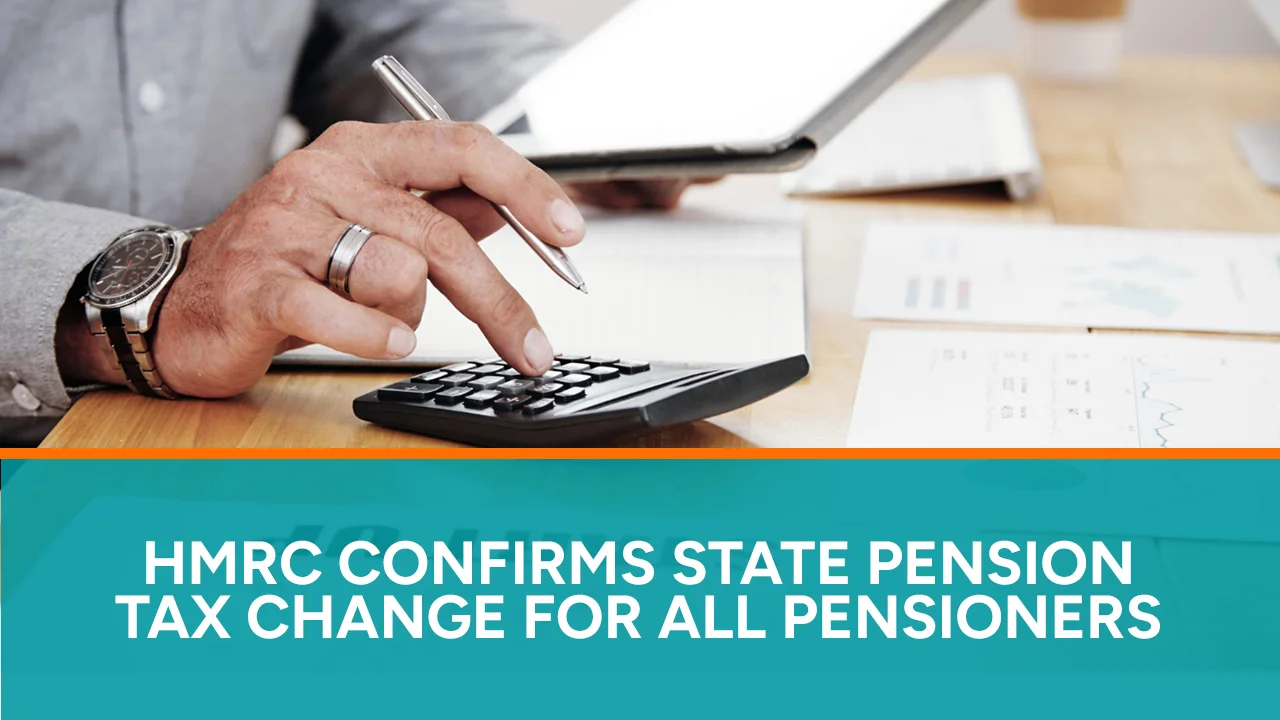
Final Note: Pensioners should not rely only on news headlines. The message HMRC confirms State Pension tax change for all pensioners can sound alarming. The truth is simple: the State Pension is taxable, the DWP pays it gross, and HMRC collects tax if your total income exceeds your allowance.
What You Should Check Before April 2027
Because changes to the State Pension in 2027 may affect pension tax, it’s wise to prepare now. Start by checking your latest State Pension amount. Then, review your private pension, job income, savings interest, rental income, and any other taxable income.
Also, check your tax code. If you have a private pension or job income, your tax code may reflect how HMRC accounts for your State Pension. If it has changed, compare HMRC’s income estimate with your actual income.
Before April 2027, pensioners should check:
- Whether they get the basic or new State Pension
- Their expected annual State Pension amount
- Their private pension income
- Any part-time work or self-employment income
- Any taxable savings interest
- Any rental or dividend income
- Their current tax code
- Any HMRC Simple Assessment letters
- Whether HMRC’s income estimate is accurate
This is especially important for those near the Personal Allowance limit. A small increase in pension income could mean you owe tax.
When Should You Speak to an Accountant?
Not every pensioner needs an accountant for State Pension tax. If your only income is from the State Pension and it’s below the Personal Allowance, your situation might be straightforward. However, you may need help if your income is mixed, your tax code seems wrong, or if you receive a confusing bill from HMRC.
You might want support if you:
- Get both State Pension and private pension income.
- Continue working after reaching State Pension age.
- Own a small business.
- I am a landlord.
- Have consultancy or agency income.
- Receive dividends.
- Get a Simple Assessment tax bill.
- Notice an unexpected change in your tax code.
- You are told by HMRC that you owe unpaid tax.
- Assist an elderly relative with their tax.
For business owners and self-employed pensioners, tax matters can involve more than just the State Pension. Income Tax, payroll, pension auto-enrolment, company accounts, VAT, and HMRC records may all be connected. This is why integrated accounting support can be helpful, especially when retirement income overlaps with ongoing work.
The Bottom Line on HMRC State Pension Tax Rules
The key point is that the State Pension has always been taxable, but HMRC does not deduct tax from it when the DWP pays.
If your taxable income is below your Personal Allowance, you typically don’t pay Income Tax. If it’s above the allowance, HMRC may collect tax from your private pension, job income, or through Simple Assessment.
So, when you hear about changes to State Pension tax, think of it as a tax code and threshold issue, not a new tax. The rules are more relevant now because the new State Pension amount is close to the frosen Personal Allowance.
For pensioners, the advice is clear: check your income, review your tax code, keep your records, and seek help if something seems off.
Stay Calm, But Stay Informed
The recent changes to HMRC tax codes for pension income can be confusing, especially for those who thought their State Pension was tax-free. However, once the rules are explained, it becomes clearer.
The State Pension is taxable, but DWP does not take taxes from it. HMRC may change your tax code if you have a private pension or other PAYE income. If the State Pension is your only income and you exceed the Personal Allowance, HMRC might use Simple Assessment. However, future government plans may prevent small tax bills for some pensioners starting in 2027/28.
Don’t panic. Pensioners should know their total income, check their tax code, and watch for future announcements. With the Personal Allowance frosen and pension rates rising, tax changes for pensioners in 2026 and beyond will be important for many UK households.
If you have income from a private pension, business, or other sources, getting your numbers checked can provide peace of mind. Knowing your tax situation is always better than getting an unexpected letter from HMRC.