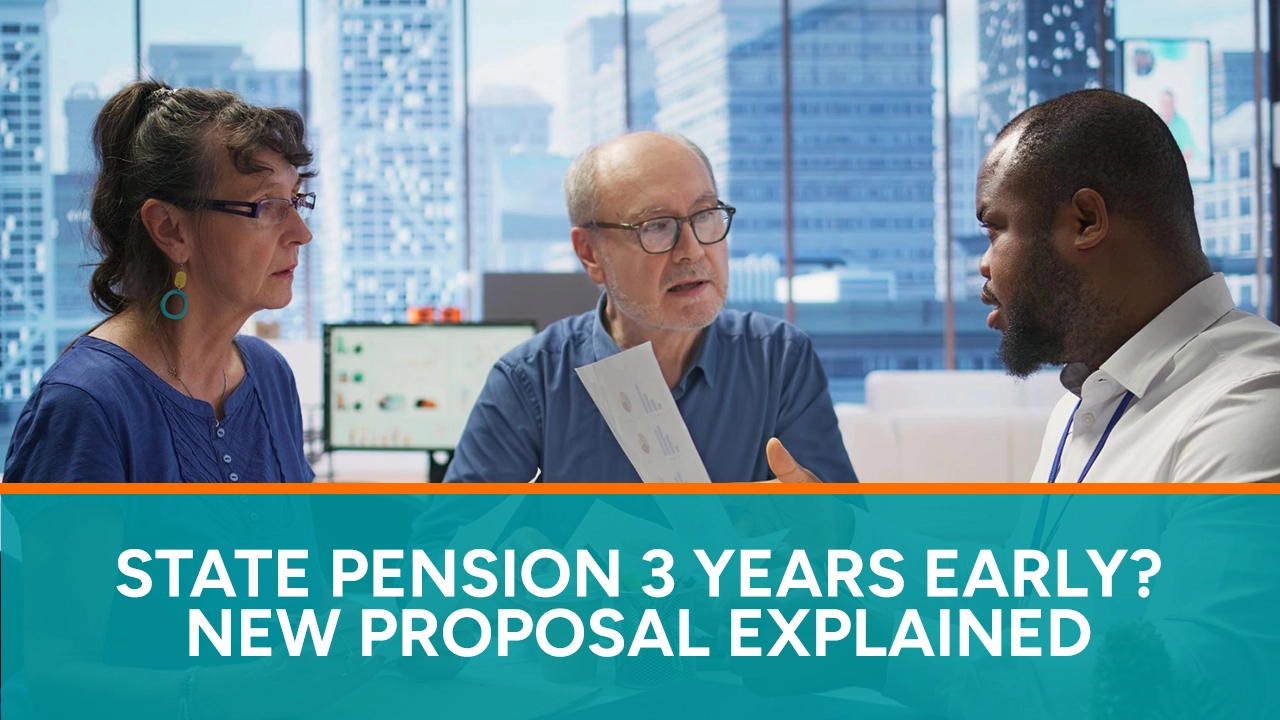
The idea of taking your State Pension three years early is getting attention as many people face a higher State Pension age. For those struggling to work into their late 60s, receiving some State Pension sooner could feel like a big change.
However, it’s important to know that people in the UK can’t currently claim their State Pension three years early. This idea is just a proposal from pension provider Aegon and is part of a larger discussion about making retirement more flexible. At the same time, a new State Pension age increase is happening now, which is separate from this proposal.
This difference matters because news about early access can make it seem like a new benefit from the Department for Work and Pensions (DWP) is already available. It is not. Your State Pension is usually available only when you reach your specific State Pension age.
So, what might change? Who could benefit if the early State Pension proposal becomes law? And what should workers nearing retirement do now? Here’s what UK households need to know.
The Big Question: Can You Claim State Pension 3 Years Early?
Currently, the answer is no. UK residents cannot choose to claim their State Pension three years before reaching State Pension age.
This means we need to answer the question, “Can you claim State Pension 3 years early?” carefully. Aegon has proposed a flexible option that could allow people to start their State Pension up to three years early, but with lower weekly payments.
This proposal is important because the State Pension system works differently from private pensions. Many private pension plans let people access their savings before State Pension age, but the State Pension has a set age determined by the government.
Aegon’s proposal aims to make this strict age requirement more flexible. People could choose between waiting for the full amount or starting earlier at a reduced rate.
However, the Department for Work and Pensions (DWP) has not introduced any early-access option yet. Therefore, anyone planning for retirement should base their plans on the current State Pension age and not assume the proposal will become law.
This is crucial for those deciding to reduce working hours, leave their job, use private pension savings, or change their business plans before retirement.
What Is Actually Happening to State Pension Age in 2026?
A major change to the UK State Pension is happening. The State Pension age will rise from 66 to 67 between April 2026 and April 2028. This change is part of current laws, so the exact age for each person depends on their birth date.
People born between April 6, 1960, and March 5, 1961, will see their State Pension age increase from 66 years and one month to 66 years and eleven months. Those born from March 6, 1961, to April 5, 1977, will start receiving their pension at 67.
The question, “Will the State Pension age rise to 67?” is no longer just a future worry; it’s already happening. This change affects those who planned to retire at 66. They may need to wait a few months longer to receive their pension.
For families with little private pension savings, this delay could have a big financial impact. People may need to look at their income, personal or workplace pensions, savings, and other support when planning their transition.
This shift has sparked important discussions about early retirement. A single national pension age is easier to manage, but everyone’s career, finances, and health are different.
What Does the “Three Years Early” Proposal Actually Mean?
The proposal to access the State Pension three years early does not mean getting the full amount sooner without any drawbacks.
Aegon suggests that people could receive their State Pension up to three years earlier but at a lower weekly amount. They have been pushing for this flexibility for years, including a plan for reduced payments that reflect the longer time receiving the pension. This idea is important.
If someone takes their State Pension early, the system needs to adjust payments for the longer period over which they will be received. This means future calculations for early payments will depend on whatever rules a future Government creates.
Right now, there is no set percentage reduction because there is no approved early-access plan. Any claims about specific percentage losses for taking the pension early should be viewed with caution until official guidelines are in place.
The Aegon proposal fits into a larger discussion about whether people should have more choices about when to start their State Pension, especially as the normal retirement age increases.
Aegon believes retirement varies for everyone. Some people work comfortably into their late 60s, while others may find it difficult to continue due to physical demands or personal changes. Supporters argue that a more flexible system could help people transition from work to full retirement.
Who Could Claim State Pension Early in the UK Under Such a System?
A key question is who might be able to claim State Pension early in the UK if a new system is created. Aegon supports offering broad options instead of just a narrow focus. The discussion has mainly highlighted people who may find it hard to keep working.
This group could include:
- Those with long years in physically tough jobs.
- Older workers having trouble with full-time work.
- People with major caregiving duties.
- Individuals wanting to transition gradually to retirement.
- Those with low private pension savings.
- Workers whose job situations make it hard to work until 67 or 68.
However, these examples don’t reflect the current rules. There isn’t a government process or test for accessing the State Pension early.
If a future government creates this option, they will face tough choices. Should everyone be eligible? Should eligibility depend on job type, health, income, or National Insurance? Will early payments last for life? How will they affect means-tested support?
These decisions will influence whether early access truly helps with financial security or shifts income from later retirement years to earlier ones. Therefore, it’s too early for anyone to plan their retirement finances assuming they will qualify.
Why Is Early State Pension Access Being Suggested Now?
The timing of this discussion is important. The changes to the State Pension age coming in 2026 are making retirement a hot topic again.
As the State Pension age rises, policymakers face challenges. Keeping people working longer can help manage the cost of an older population. But raising the pension age doesn’t impact everyone equally.
For example, someone in a flexible job might find it easier to work into their late 60s than someone who has done heavy manual labour for years. Similarly, people in demanding jobs in healthcare, education, or caregiving may feel different pressures.
For professionals and business owners, retirement can be gradual. Many might cut back their hours, switch to consulting, or stay involved in their business after reaching retirement age. This means planning for retirement starts well before stopping work.
Healthcare businesses facing changes in work patterns, director pay, or employee retirement can benefit from coordinated accounting support. We provide accounting services for medical and healthcare professionals in the UK, helping them manage financial changes.
Organisations in the education sector also deal with varied employment and pension issues. Specialist accountants can help these businesses organise their payroll and accounting as their staff evolves.
Ultimately, raising retirement ages impacts more than just individuals; it also affects employers, payroll planning, workforce retention, and pension contributions.
How Much Is the New State Pension in 2026?
For the 2026/27 tax year, the full State Pension is £241.30 per week, totalling about £12,547.60 a year.
However, not everyone gets this full amount. What you receive depends mainly on your National Insurance record, and transitional rules may affect those who built up contributions before April 2016.
It’s important to understand how reduced State Pension rates work. If someone plans to access their pension early, they first need to know their normal entitlement. A reduction from £241.30 is different from a reduction for someone who was already earning less.
Some people may even receive more than the standard rate due to protected payments from transitional arrangements.
So, a single headline figure for the State Pension doesn’t show what each person will actually receive. The best way to know your amount is to get a personal State Pension forecast, not rely on an average figure from the news.
State Pension Eligibility UK: Why Your NI Record Matters
Understanding the rules for UK State Pension eligibility is important before considering early or regular retirement.
Under the new State Pension system, you need at least 10 qualifying years on your National Insurance record to get any pension. These years don’t have to be in order.
You can earn a qualifying year in various ways. For example, you might get one by working and paying National Insurance, receiving certain credits, or making voluntary contributions. Credits can help protect your pension record if you’re not working due to caring for someone, unemployment, or illness.
The 35-year requirement needs some explanation. If your National Insurance record started after April 2016, you usually need 35 qualifying years to get the full new State Pension. For those whose records began before April 2016, the calculations can be different. Some people may need more than 35 qualifying years if they were contracted out of the pension scheme.
So, don’t assume: “I have 35 years, so I will definitely get the full amount.” Checking your actual Government forecast will give you a clearer view.
This National Insurance information is also crucial for business owners and employers. Payroll records and National Insurance reporting are part of overall compliance. Businesses in London can use professional PAYE Compliance and Payroll Services to manage their payroll and responsibilities effectively.
How to Check Your GOV.UK State Pension Age and Forecast
Instead of guessing your State Pension age, check it on the official GOV.UK site. The State Pension forecast service can tell you:
- How much State Pension you might receive,
- When you can get it,
- If you can increase it, and
- How to fill National Insurance gaps that may boost it.
This information is especially helpful for those in their 50s and 60s. For instance, if you plan to stop working at 64 but your State Pension age is 67, you’ll realise you need to fund a three-year gap.
You can then assess your finances, including income, savings, and other pensions.
Also, if you wonder, “Can I retire before I get my State Pension?” remember that retirement and State Pension age are different. You don’t have to wait for your State Pension to retire; many people do so if they have enough income from other sources. However, quitting work doesn’t mean you will get your State Pension sooner.
So:
- Retirement age and State Pension age are not the same.
This is important when planning your finances just before you start receiving your State Pension.
Could Taking State Pension Early Leave You Worse Off Later?
The main benefit of an early-access system is clear: you get money sooner. But there’s a notable downside. If someone chooses to retire early with the State Pension, they might receive a lower weekly income for a long time.
Imagine a system where you could start payments three years early but at a lower rate forever to balance those extra payments. That could help with immediate cash needs but mean less money later in retirement.
Currently, there’s no official formula from the Government for reducing payments, so we shouldn’t make one up. However, this trade-off is key to the idea.
This issue is especially important for those who rely heavily on the State Pension for most of their retirement income. Someone with large private pension savings or investments can handle a smaller State Pension better. In contrast, someone who depends mainly on the State Pension could face serious problems later.
That’s why we can’t simply ask, “Is getting money earlier helpful?” We should instead consider:
- How much weekly pay would I lose?
- Will that loss last for my lifetime?
- How will inflation adjustments work?
- Could early access impact my eligibility for other support?
- What other retirement income do I have?
- Can I cut back on work instead of stopping completely?
- What if I live much longer than I expect?
These questions show why those who support early access also see the need for protections. Previous Aegon discussions have noted the risk of people ending up with retirement incomes below the levels for means-tested support.
What Is Different About Deferring Your State Pension?
There is an interesting issue in the current system. Usually, you cannot claim your State Pension early, but you can choose to delay it after reaching the State Pension age. If you delay, the amount you receive later can increase, according to GOV.UK, your new State Pension usually rises for every week you delay, as long as you defer for at least nine weeks. Deferring for a full year boosts weekly payments by almost 5.8%, but certain benefits could affect this increase.
Supporters of the new proposal for early access to the State Pension in 2026 argue that if people can choose to get their pension later for a higher amount, why shouldn’t they be allowed to access it earlier for a lower amount?
However, the results of early access and deferral are not the same. Deferring generally leads to a higher guaranteed income later, while taking it early could lower it. Policymakers must consider that some may choose early payments due to immediate financial need without understanding the long-term impacts.
This is why a flexible system might require strong guidance, clear examples, and well-thought-out protections if it is ever put in place.
Private Pension Access Is Also Changing in 2028
Don’t confuse State Pension rules with the retirement age changes coming in 2028.
Right now, most private pensions let you access funds at age 55. This will increase to 57 starting April 6 2028. Some exceptions apply.
There are two key retirement points to note:
- State Pension age will change from 66 to 67 between 2026 and 2028.
- The minimum age for accessing most private pensions will go from 55 to 57 starting April 6 2028.
These are different rules. The change in private pension age doesn’t mean everyone will have to wait until 57. Individual circumstances, pension rules, and health issues can change this. Always check GOV.UK and your pension provider before making choices.
For employers, pensions affect the workplace too. Auto-enrolment responsibilities go on even when someone is nearing retirement.
Businesses in London managing employee pensions alongside PAYE might find it helpful to use professional Payroll and Pension Auto-Enrolment Services to keep contributions and responsibilities in order.
What About the State Pension Age Rising to 68?
The discussion about the State Pension age doesn’t end at 67. The law currently says the State Pension age will rise from 67 to 68 between 2044 and 2046. There has been a lot of debate about moving this date up. Past reviews have looked at different schedules, but the official dates remain 2044 to 2046.
If someone asks, “When will State Pension age 68 start?” they shouldn’t assume that rumours of an earlier date are official.
There’s another key update. The Government began the third State Pension age review in July 2025. This review will evaluate if the current State Pension age rules are still suitable. It will use data on life expectancy and other reports gathered for this review.
This means the discussion about the retirement age in the UK is still ongoing. However, this doesn’t mean that a new age of 68, 69, or 70 has been confirmed. It shows that policymakers are still looking at how the State Pension age should work in the future.
For those planning for many years ahead, it’s important to know that pension policies can change before they retire. It makes more sense to regularly check forecasts and retirement plans instead of sticking to the rules from the beginning of their careers.
Why Employers Should Pay Attention to State Pension Age Changes
State Pension age changes affect not just workers, but also businesses with older employees. As more people work well into their 60s, companies need to consider issues like payroll, pensions, flexible work, and planning for future leadership.
Employers should not assume that employees will retire when they reach State Pension age. Many can and choose to continue working.
From a payroll standpoint, an employee’s age can affect how their National Insurance is handled. Therefore, accurate information and payroll processing are crucial.
For growing businesses, managing these tasks manually can become challenging as teams grow and circumstances vary. Our PAYE Compliance and Payroll Services for small businesses in London can help with payroll duties, while our Payroll and Pension Auto Enrolment Services can assist in connecting payroll with pension responsibilities.
This connection is vital for organisations with diverse workforces. Medical practises and healthcare businesses often hire professionals of different ages and contracts. Experienced accountants for healthcare professionals in the UK can offer tailored accounting support and ensure compliance.
Similarly, schools and training organisations often handle many employees and various payment structures. Accountants for education providers in the UK can help these organisations adapt their financial systems to meet changing workforce needs.
Approaching Retirement While Running a Business? Think Beyond State Pension
As directors, sole traders, and business owners approach retirement age, they often face more than just choosing a last working day. They might sell their business, keep shares, cut back on hours, adjust salaries, take dividends, continue consulting, or gradually pass on duties. Each option brings different financial and tax implications.
Because of this, retirement planning should look at the overall situation, not just the weekly State Pension amount. Important questions include:
- What income will continue if work hours are reduced?
- How will business profits change?
- Will payroll need adjustments?
- What pension contributions are still being made?
- What taxable income will come from various sources?
- Are financial records and tax obligations up to date?
- How will cash flow change when regular pay stops?
For local business owners, consulting Chartered Certified Accountants in Islington can help review business accounts and tax issues during major life changes. Similarly, our accountants in Central London offer clear accounting support for evolving needs.
While an accountant cannot provide pension or investment advice, knowing your tax position and business income is crucial before making important retirement choices.
Could Early State Pension Access Actually Become Government Policy?
This is likely the hardest question.
The Aegon State Pension idea has sparked discussions because it tackles a real issue: one pension age doesn’t fit everyone’s different careers, health, savings, and life expectancies.
Aegon has backed earlier, reduced access to the State Pension for years. Evidence in Parliament shows that early pension payments with reduced amounts are not a new idea.
However, pushing for a policy is very different from making it happen in government.
Before such a system starts, policymakers may need to clarify many issues like:
- qualifying conditions
- age limits
- reduction calculations
- cost
- means-tested benefits
- National Insurance records
- protections for vulnerable claimants
- communication and financial guidance
- long-term costs to public finances.
Because of this, we cannot say for sure that a State Pension system three years early will happen.
The safest conclusion is that it is a serious idea in the broader retirement-age discussion, not something people can claim now.
Anyone reading on social media that a new DWP rule allows people to start State Pension payments three years early should check the information carefully.
What Should You Do Now If You Are Approaching Retirement?
You don’t have to wait for politicians to decide on early access to the State Pension. You can improve your retirement planning now.
Start by checking your official State Pension forecast. This gives you a personal estimate instead of just the standard full-rate amount.
Next, look at your National Insurance record for any gaps. Just because there’s a gap doesn’t mean you need to pay voluntarily. Whether it helps your State Pension depends on your situation, so figure that out first.
Also, find out when you can access your workplace and private pensions, and review their specific rules.
Then, think about the financial gap between when you want to stop working and when your State Pension starts. For example:
- Preferred retirement age: 64
- State Pension age: 67
- Potential gap: three years
You need to plan how to cover those three years based on current rules, not by assuming an early State Pension will fix it.
Possible resources to consider are:
- Continued earnings
- Part-time work
- Private or workplace pensions
- Savings
- Investment income
- Business income
- Other support you may qualify for
Retirement decisions often involve pensions, investments, and taxes. Getting regulated financial advice can help with pension choices, while professional accounting advice can clarify tax and business matters.
Common Myths About the State Pension 3 Years Early Proposal
As interest grows, many misconceptions are likely to spread.
Myth 1: DWP says everyone can claim three years early.
Fact: There is no DWP scheme that lets people take their State Pension three years before the official age.
Myth 2: The State Pension age is still 66 for everyone.
Fact: The age is increasing from 66 to 67 starting in April 2026 and continuing until 2028. Your exact age depends on your birth date.
Myth 3: Everyone gets £241.30 a week.
Fact: £241.30 is the full State Pension rate for 2026/27, but actual payments vary based on National Insurance records and transitional arrangements.
Myth 4: Having 35 qualifying years guarantees full payment.
Fact: The 35-year rule applies mainly to those with National Insurance records starting after April 2016. Older records may lead to different outcomes.
Myth 5: Retiring early automatically starts your State Pension.
Fact: You can stop working before State Pension age if your finances allow, but this usually won’t let you start receiving your Pension sooner.
Myth 6: The State Pension age of 68 has already been moved up.
Fact: Current laws still plan to raise the age from 67 to 68 between 2044 and 2046, but it may change with government reviews.
Frequently Asked Questions
Can you claim State Pension 3 years early?
No, not under the current UK State Pension rules. Aegon has suggested allowing early access to the State Pension for a reduced amount, but this isn’t an official government option.
What age can you claim State Pension in 2026?
The age depends on your birth date. The State Pension age will increase from 66 to 67 between 2026 and 2028. You can use the GOV.UK State Pension age checker to find your specific age.
Is the State Pension age currently increasing?
Yes, the age is going up from 66 to 67 between April 2026 and April 2028.
What is the full new State Pension in 2026/27?
In 2026/27, the full new State Pension will be £241.30 per week, which totals about £12,547.60 a year. Your actual amount may be lower or sometimes higher.
Would taking State Pension early mean receiving less?
Yes, if you take it early under the Aegon proposal, your payment would be reduced because you start receiving it sooner. However, there isn’t an official reduction rate yet since this plan hasn’t been implemented.
Would the reduced amount last forever?
There are no official rules about this right now, so we can’t say for sure. Future laws would need to clarify how reductions apply during retirement.
Can I retire before State Pension age?
Yes, you can retire early, but you won’t get your State Pension until you reach the eligible age. You’ll need another source of income to support yourself.
Can I take my private pension before State Pension age?
Usually, yes, but it depends on your pension scheme. Most registered pensions allow access at 55, which will increase to 57 starting April 6, 2028, with some exceptions.
How many National Insurance years do I need?
To receive any new State Pension, you generally need at least 10 qualifying years. If your record started after April 2016, you need 35 qualifying years for the full amount. Older records may have different rules.
How do I check my State Pension forecast?
You can use the official GOV.UK State Pension forecast service to see how much you might get, when, and if you can increase your entitlement.
Will State Pension age rise to 68?
Yes, laws currently state that the age will increase from 67 to 68 between 2044 and 2046. However, the government reviews this regularly.
Is Aegon part of the Government or DWP?
No, Aegon is a pension and investment provider and should not be confused with government policy.
A Proposal Worth Watching, Not a New Entitlement
The headline “State Pension 3 years early” grabs attention. For those worried about working until 67, the chance to get the State Pension sooner might seem helpful.
Currently, you can’t choose to receive your UK State Pension three years early for a lower amount. What is changing is the State Pension age. It will rise from 66 to 67 starting in April 2026 and continuing until 2028. The full State Pension in 2026/27 will be £241.30 a week, and the government is reviewing the retirement age for the future.
The idea of an early State Pension brings up a key question: is there a single age that works for everyone? More flexibility could help those who find it hard to keep working, but lower payments for everyone could also create financial problems for those who rely on State Pension income.
For now, people nearing retirement should focus on the current rules, check their State Pension forecast, and understand their National Insurance situation instead of just waiting for possible changes.