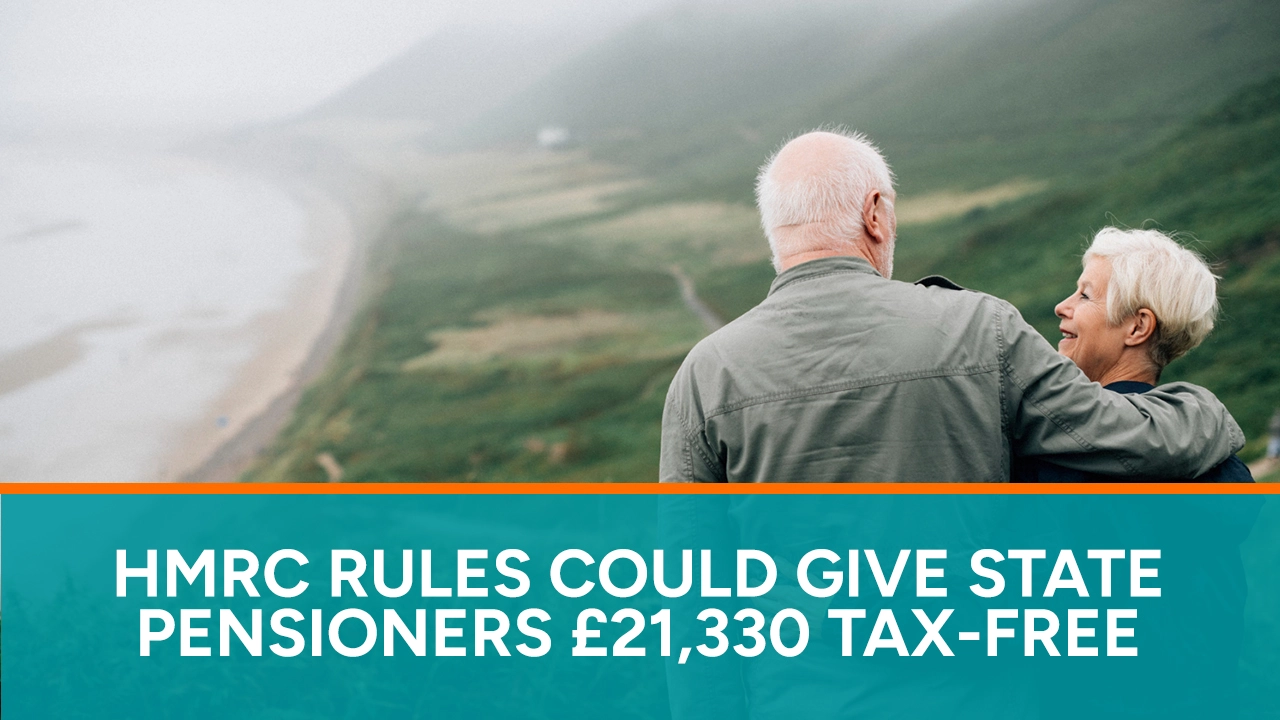
Many older people in the UK need to pay more attention to taxes when planning for retirement. The State Pension is increasing, but the standard Personal Allowance remains the same. This means more pensioners may find that their income is now close to the tax limit.
Two HMRC reliefs can help some households. If a pensioner qualifies for the £1,260 Marriage Allowance and the £7,500 Rent a Room allowance, along with the £12,570 Personal Allowance, they could have up to £21,330 in income that is tax-free.
This is where the term “HMRC £21,330 tax-free” comes from. However, it’s important to note that HMRC has not created a new £21,330 Personal Allowance for pensioners. The £21,330 figure comes from adding different tax rules, each with specific eligibility requirements.
For pensioners trying to understand their taxes, this difference is important.
Why Pensioners Are Paying More Attention to Tax in 2026
The standard Personal Allowance for the 2026/27 tax year is £12,570. This is the amount an individual can earn before paying Income Tax. This allowance will stay at £12,570 until the end of the 2030/31 tax year.
At the same time, pension incomes are increasing. The full new State Pension will be £241.30 per week in 2026/27, which adds up to about £12,548 a year. Not everyone gets this full amount, as it depends on factors like their National Insurance record.
The full new State Pension is close to the £12,570 Personal Allowance. This means that even small amounts of extra income can push some retirees over their tax-free limit. Interest from savings, workplace pensions, private pensions, job income, and rental earnings can all affect this limit.
Understanding State Pension tax rules for 2026 is important, even for those who have never seen themselves as taxpayers. This is because State Pension is taxable income. HMRC does not usually take tax from your State Pension before you receive it. Instead, it adds to your total taxable income, and you could owe tax if that total exceeds your allowance.
So, the question isn’t just, “Do pensioners pay tax?” A better question is:
How much taxable income do pensioners have, and what HMRC allowances or reliefs can lower their tax responsibilities?
Is There Really an HMRC £21,330 Tax-Free Allowance?
This is the key point to know:
There is no standard £21,330 Personal Allowance for pensioners. The regular individual allowance stays at £12,570 for 2026/27.
An eligible person might combine different benefits like this:
- Standard Personal Allowance: £12,570
- Marriage Allowance from a spouse or partner: £1,260
- Rent a Room relief: up to £7,500
When you add these amounts, you get:
£12,570 + £1,260 + £7,500 = £21,330.
This is why people talk about the £21,330 tax-free for pensioners.
However, these three allowances work differently. The Marriage Allowance lets one spouse transfer part of their allowance to the other. Rent a Room relief gives a tax break for renting furnished space in your main home.
So, when asked if £21,330 is a pensioner Personal Allowance, the answer is simple: No.
The £21,330 figure shows a combined tax situation under specific conditions, not a new general allowance for pensioners.
This distinction should not stop eligible households from checking the rules. In fact, it’s crucial to double-check because qualifying households could save a lot on taxes.
Rule One: How Marriage Allowance Can Help Pensioners
The first important HMRC rule for pensioners is Marriage Allowance.
Marriage Allowance lets an eligible person transfer £1,260 of their Personal Allowance to their partner. This can reduce the partner’s Income Tax by up to £252 in a year. This relief can be helpful for retired couples.
For instance, one spouse may get a small pension and stay under the Personal Allowance, while the other has a bigger State Pension and an occupational pension. Sometimes, one partner is retired while the other is still working. In these cases, pensioners may use part of an unused allowance.
HMRC states that the lower earner should usually have income below their Personal Allowance. The receiving partner must generally pay basic-rate tax. In England, Wales, and Northern Ireland, this means having income within the basic-rate range, while different tax bands apply in Scotland.
Receiving a pension does not stop someone from claiming Marriage Allowance. HMRC confirms that having pension income does not affect eligibility.
So, can pensioners claim Marriage Allowance? Yes, as long as they meet the conditions.
How the £1,260 Marriage Allowance Actually Works
If one partner in a married couple has a taxable income below the £12,570 Personal Allowance, they might qualify for the HMRC Marriage Allowance. They can transfer £1,260 of this allowance to their spouse or civil partner. This reduces the transferor’s allowance and gives the recipient a tax benefit.
HMRC shows that transferring the allowance can lower a couple’s overall tax bill, even if the lower earner pays some Income Tax themselves. It’s best to think about Marriage Allowance for pensioners as a household issue instead of just focusing on one person’s tax situation.
Many might think a lower-earning pensioner should always transfer the allowance. However, households with savings, dividends, property income, or multiple pensions need to calculate carefully. HMRC advises those with different types of income to know their taxable income before deciding who should claim the allowance. This is especially important if their income is close to a tax limit.
At Clarkwell & Co., when there are various income sources, it’s essential to look beyond just the State Pension amount. Pension income, PAYE codes, savings, property income, and current allowances all interact. If there are issues with HMRC calculations or tax adjustments, our HMRC Correspondence Support in London can help taxpayers understand any changes.
Marriage Allowance Could Also Be Backdated
Eligible taxpayers can claim HMRC Marriage Allowance for previous years. You can backdate claims to April 6, 2022, if you meet the eligibility requirements for those years. This means some couples who missed claiming before could receive tax reductions for earlier years.
However, the amount you can claim depends on your situation and the allowance rates for each year. Don’t assume that every backdated claim will give you the maximum refund.
Once you set up Marriage Allowance, it usually continues automatically unless you cancel it or your situation changes. HMRC shows this allowance through tax codes: an M code for the recipient and an N code for the transferor.
If a pensioner’s tax code changes unexpectedly after claiming Marriage Allowance, it’s a good idea to check the calculation instead of assuming it’s wrong. Also, anyone whose income has increased significantly should consider whether the transfer is still suitable.
Rule Two: The £7,500 Rent a Room Scheme
The second important part of the HMRC £21,330 tax-free rule is the Rent a Room Scheme.
This scheme allows people who rent out furnished rooms in their main home to earn up to £7,500 tax-free. According to HMRC’s guidelines, if your income from renting doesn’t exceed £7,500, you won’t have to pay tax on it.
This scheme can be useful for retirees who live alone in a home that used to fit a bigger family. After children move out, retirees can rent out a spare room to a lodger. If the home meets HMRC’s requirements, this can give extra income without incurring tax on the first £7,500.
However, the rules are strict. The property must be your main home, and the room must be furnished. This scheme is different from regular tax rules that apply to separate rental properties or buy-to-let investments.
How Much Rental Income Is Tax-Free Under Rent a Room?
For individuals who qualify and don’t share rental income, the annual Rent a Room limit is usually £7,500. However, if someone else also rents out part of the same property, this limit drops to £3,750 per person. This is key when considering how much rental income is tax-free under Rent a Room. For many, the answer is £7,500, but that’s not always the case.
Another important point is that HMRC counts total earnings, not just the listed monthly rent. Total earnings can include extra charges for services like meals, cleaning, or laundry. So, if someone charges £600 a month for rent and also charges for meals or cleaning, they can’t assume only the £600 counts toward the limit.
Additionally, renting a room for part of the year doesn’t mean the £7,500 limit is reduced. HMRC states that the limit stays the same even if the room isn’t rented for a full year. These details show why accurate calculations are important.
What Happens If Rent Goes Above £7,500?
Just because your income from the Rent a Room scheme goes over £7,500, it doesn’t mean all that money is taxable.
HMRC offers two ways to calculate the taxable amount when you exceed the limit.
In Method A, you figure out your actual rental profit by factoring in your allowable expenses.
In Method B, you can calculate your taxable income based on gross receipts above the £7,500 limit.
Which method is better for you depends on your situation. For example, if you have high expenses, Method A might work better. If your costs are low, Method B could be more attractive.
This is where a Self Assessment Accountant in London can help.
Rent a Room relief seems simple, but once you exceed the limit, you have to think about allowable expenses, reporting rules, and how it interacts with other income.
Pensioners shouldn’t assume that going over £7,500 means losing all their benefits. They should get the right calculation for the tax year.
A Practical Example of the £21,330 Figure
Let’s look at a simple example with a retired woman named Margaret.
Margaret gets a pension and is married to David. David earns less than his Personal Allowance, while Margaret stays under the basic-rate tax level. If David can transfer his Marriage Allowance, Margaret may benefit from an extra £1,260.
Her total tax position would then be:
£12,570 standard Personal Allowance + £1,260 transferred Marriage Allowance = £13,830.
Now, suppose Margaret has a furnished spare room in her home and makes £7,500 from renting it out in a year. This amount can be offset by the £7,500 Rent a Room allowance.
The combined figure becomes:
| Tax provision | Potential amount |
| Standard Personal Allowance | £12,570 |
| Marriage Allowance transferred | £1,260 |
| Rent a Room exemption | £7,500 |
| Combined figure | £21,330 |
This explains the claim that state pensioners can have a tax-free income of £21,330. However, Margaret does not have a Personal Allowance of £21,330. Her tax situation involves various rules and laws.
This matters a lot if she has savings interest, dividends, another pension, job income, or rent income over the Rent a Room limit. So, when people search “how can state pensioners get £21,330 tax-free?”, they should see £21,330 as a possible total, not a guaranteed amount.
Why the State Pension Makes This More Important
The full new State Pension will be £241.30 each week in 2026/27, totalling about £12,548 for the year. HMRC has specific rules for calculating taxable State Pension, especially when pension rates change in April.
Right now, the full pension amount is very close to the £12,570 Personal Allowance. For pensioners with no other taxable income, this may not result in an Income Tax bill.
However, many retirees have other sources of income, such as:
- Workplace pensions
- Private pensions
- Annuity income
- Savings interest
- Part-time jobs
- Property income
- Self-employment income
- Taxable investment income
Because of this, the question “How much can pensioners earn tax-free in 2026?” does not have a single answer. The tax-free amount depends on the type of income, personal allowances, reliefs, savings allowances, and individual circumstances.
Therefore, the terms State Pension Personal Allowance and State Pension taxable income are not the same. The State Pension does not get a special £12,570 exemption; instead, it usually uses part of the regular Personal Allowance since it is part of taxable income.
State Pension Taxable Income: What HMRC Actually Does
HMRC says that State Pension is taxable income, but they usually don’t take tax out before you get it. Instead, HMRC looks at the pension along with other taxable income. If someone has an occupational pension too, HMRC might change the tax code for that pension to collect the right amount of tax. This can surprise some pensioners.
People might see their private pension tax code change and think HMRC is taxing it wrong. However, the change may actually be linked to the untaxed State Pension income. That’s why it’s helpful to check HMRC’s pension tax rules and the PAYE coding notice together. Mistakes can occur, but not every tax code change is a mistake.
Pensioners who work may have their job income taxed through PAYE while getting their State Pension without tax deductions. Those with multiple pensions may find their tax situation even more complicated.
At Clarkwell & Co., we often help people with more than one income source. For those nearby, our Chartered Certified Accountants in Islington and Professional Accountants in Camden can help clarify the overall tax situation instead of examining each income separately.
Can Pensioners Increase Their Tax-Free Income?
A key question for pensioners is, “Can they increase their tax-free income?” Sometimes, yes. This usually means using existing tax allowances and reliefs, not increasing the standard Personal Allowance from HMRC. Examples include Marriage Allowance and Rent a Room relief.
Pensioners should also look at other tax areas, like savings interest, investments, pension withdrawals, or business income. The best strategy depends on the type of income. For instance, someone earning £7,000 from a lodger is in a different tax situation than someone earning £7,000 from a rental property. Similarly, £1,000 in savings interest is taxed differently than £1,000 from a job.
This shows that pensioner tax relief in the UK can’t be summed up in one simple number. The source of the money is important. So, when checking HMRC tax rules for 2026, pensioners should first gather a full picture of their income, not just total their bank deposits.
Who Is Most Likely to Benefit From These HMRC Rules?
This article’s advice may not suit all pensioners, but some groups should take note.
Married pensioners with unequal incomes
If one partner earns less than their Personal Allowance and the other pays tax, they may save money with Marriage Allowance.
Pensioners with extra furnished rooms
Those who own or rent their home and have a spare furnished room might qualify for Rent a Room relief.
Retirees with multiple small incomes
People with a State Pension, savings interest, workplace pensions, or part-time jobs should review their allowances to maximise benefits.
People who haven’t claimed Marriage Allowance
Couples may be able to backdate their claim if they qualified in previous years.
Pensioners receiving unexpected letters from HMRC
Sometimes the issue isn’t finding new allowances but ensuring HMRC has calculated taxes correctly.
For those getting calculations or notices from HMRC, professional support in London can help clarify HMRC’s information and determine if any action is needed. This is especially useful for retirees transitioning from work, as their tax situation may become more complex.
What About Pensioners Who Still Work?
Retirement often doesn’t mean stopping work altogether. Many people work full-time even after reaching State Pension age, while others switch to part-time jobs, consulting, or self-employment.
This can complicate tax calculations for pensioners in the UK. Both work income and the State Pension can be taxed. Continuing to work may push total income above the Personal Allowance quickly.
Marriage Allowance might still apply to some couples, but they must meet specific income and tax rate requirements.
For employers, having older workers brings payroll considerations. They must ensure PAYE (Pay As You Earn) runs correctly for employees over State Pension age, and National Insurance rules may change based on age and other factors.
Our Payroll and Pension Auto Enrolment Services in London can help businesses with payroll calculations, PAYE reporting, and ongoing pension management.
The key point is that retirement tax planning shouldn’t assume all pensioners stop earning. HMRC taxes income, not just a person’s self-description as retired.
What If the Pensioner Has a Small Business?
Many pensioners run businesses after they reach State Pension age. For example, someone might have a cleaning service, a consultancy, or a childcare business while receiving their pension. This can make tax calculations more complex.
Business profits may affect the remaining Personal Allowance after considering State Pension income. Depending on the situation, Self Assessment may be necessary.
For business owners in cleaning services, Clarkwell & Co. can assist with bookkeeping, tax compliance, and managing the link between business profits and personal income. Similarly, those in childcare and residential care may need help with both business and personal taxes. Our Accountants for Care Homes and Nurseries in the UK focus on the accounting needs specific to these fields.
It’s important to remember that HMRC rules enabling pensioners to pay less tax should not just focus on pension income. A relief that benefits someone who relies solely on their pension may change significantly when business profits are included.
Do You Need to File Self Assessment for Rent a Room Income?
Many people mistakenly think that using Rent a Room relief means you must file a Self Assessment tax return. This isn’t usually true. HMRC says that if your rental income is below the Rent a Room limit, it is tax-free.
However, if your income exceeds the limit or you need to choose a different calculation method, your situation might change. Some people already need to file a Self Assessment for other reasons. So, pensioners shouldn’t decide on filing based only on one number.
A full review should look at all income sources and the person’s tax situation. If a return is needed, our Self Assessment Accountant in London can help prepare it, report income correctly, and find any available reliefs.
It’s especially important to report accurately if you have pension income along with rental income, investments, or self-employment earnings.
Common Mistakes Pensioners Should Avoid
The HMRC £21,330 tax-free headline seems appealing, but it can lead to mistakes.
- Not all pensioners get £21,330 tax-free: the standard Personal Allowance is £12,570.
- Rent a Room relief is not part of the Personal Allowance: it’s a separate exemption for specific income.
- Marriage Allowance doesn’t apply to every couple: there are income and tax-rate rules.
- You can’t use Rent a Room relief for a buy-to-let: it must be part of your main home during the qualifying period.
- The shared-income limit is £3,750: if someone else shares rental income from the same property, this limit may apply.
- Don’t only consider State Pension income: savings, jobs, pensions, and other taxable income can impact your total tax.
- Watch for changes in your tax code: a new code might signal HMRC is collecting tax on untaxed pension income.
Avoiding these mistakes helps you plan taxes effectively rather than just following an attractive headline.
A Simple HMRC Tax Check for Pensioners
Pensioners wondering if they can benefit from these rules should start with an easy review.
First, list all income expected this tax year, such as:
- State Pension
- Workplace pensions
- Private pensions
- Wages
- Self-employed profits
- Savings interest
- Investment income
- Property receipts
Next, identify what income is taxable and any allowances or exemptions that apply. For married couples and civil partners, check if one person’s income is below the Personal Allowance and if the other meets the Marriage Allowance criteria.
If you rent out a furnished room in your home, list all earnings, including payments for services, not just rent.
Finally, check any tax codes or calculations from HMRC. The goal is to ensure the correct tax is paid while using all available allowances and reliefs.
Why Professional Advice Can Matter More as Pension Income Rises
The frozen Personal Allowance means more pensioners may be near the Income Tax limit. At the same time, retirement income is getting more complicated. Many people retire with multiple workplace pensions, ISAs, savings accounts, investments, rental income, or part-time jobs.
Because of this, understanding the State Pension and Personal Allowance alone may not show if someone owes tax. It’s important to look at all sources of income.
At Clarkwell & Co. Chartered Certified Accountants, we help individuals and businesses in London with tax returns, HMRC questions, payroll, and tax compliance. Our Chartered Certified Accountants in Islington and Professional Accountants in Camden can provide valuable local support for those handling complex finances.
Good tax planning is not just about finding loopholes; it’s about applying HMRC rules properly. For example, Marriage Allowance and Rent a Room relief are important parts of the tax system, but many taxpayers either ignore them or don’t fully understand how they work.
Frequently Asked Questions About HMRC £21,330 Tax-Free Rules.
Is there a £21,330 Personal Allowance for pensioners?
No, the standard Personal Allowance for 2026/27 is £12,570. The £21,330 amount comes from adding the £12,570 allowance, a £1,260 Marriage Allowance transfer, and up to £7,500 from Rent a Room relief.
How can State Pensioners get £21,330 tax-free?
Pensioners may use their Personal Allowance, receive Marriage Allowance from a partner, and qualify for Rent a Room relief. Each has specific eligibility rules.
Can pensioners claim Marriage Allowance?
Yes, being a pensioner does not prevent someone from claiming Marriage Allowance. They must still meet the income, relationship, and tax-rate conditions.
How much is Marriage Allowance in 2026/27?
The Marriage Allowance transfer is £1,260, which can lower the recipient’s tax by up to £252.
Can Marriage Allowance be backdated?
Yes, eligible claims can be backdated to April 6, 2022.
Is State Pension taxable?
Yes, the State Pension counts as taxable income when HMRC checks if your income exceeds your allowances. Tax is not deducted from the State Pension before you receive it.
What is the full new State Pension in 2026/27?
For 2026/27, the full new State Pension is £241.30 per week. The actual amount received depends on the person’s National Insurance record.
What is the Rent a Room allowance?
The Rent a Room allowance of £7,500 exempts income from letting furnished rooms in your main home.
What happens if two people receive the rental income?
If two people earn rental income from the same property, the exemption limit is reduced to £3,750.
Can Rent a Room relief be used for a buy-to-let property?
Generally, no. The relief is for furnished accommodation in your main home, not for investment properties.
Do I need to file a Self Assessment if I earn below £7,500 from Rent a Room?
Usually, if your income is below the limit, it’s automatically exempt. However, other financial aspects might require a Self Assessment.
What happens if Rent a Room income exceeds £7,500?
You must calculate tax using normal rental profit rules or based on gross receipts above the limit.
Does Marriage Allowance give someone a £13,830 Personal Allowance?
Yes, the £1,260 transfer can raise the recipient’s effective allowance to £13,830 compared to the usual £12,570.
How much can pensioners earn tax-free in 2026?
The standard Personal Allowance is £12,570, but other exemptions might apply based on individual circumstances.
Are the HMRC £21,330 tax-free rules automatic?
No, Rent a Room relief can apply automatically if within the limit, but Marriage Allowance must be claimed and eligibility verified.
Can savings interest affect a pensioner’s tax?
Yes, savings interest can impact a pensioner’s overall tax situation, depending on their other income and circumstances.
Can I still work while receiving State Pension?
Yes, but income from employment combined with taxed State Pension may lead to Income Tax.
Can HMRC collect State Pension tax through another pension?
Yes, if tax is due, HMRC may adjust the tax code of any other pension you receive.
Should pensioners check their HMRC tax code?
Yes, especially if they have multiple income sources, just started receiving State Pension, or claimed Marriage Allowance.
Should everyone claim Marriage Allowance?
No, check eligibility and overall income first. Sometimes, transferring the allowance may cause tax for the lower earner, even if the couple benefits overall.
£21,330 Is Possible, But It Is Not Automatic
The headline mentions two real tax rules, but the details are important. For 2026/27, the standard Personal Allowance stays at £12,570. If you have a spouse or civil partner, they can transfer £1,260 through Marriage Allowance. Also, if you rent out a furnished room in your main home, you might get up to £7,500 in Rent a Room relief. Together, these add up to £21,330.
However, HMRC hasn’t created a £21,330 tax-free allowance for pensioners. Instead, some taxpayers might combine different allowances to reach a similar tax-free total.
With the full new State Pension at £241.30 per week and the Personal Allowance frozen at £12,570, it’s a good idea for retirees to review their tax situation.
It’s best to check your specific income against the rules instead of just looking at the headline number. If your retirement income comes from various pensions, a job, a small business, rental income, or savings, Clarkwell & Co. Chartered Certified Accountants can help you understand how these sources work together and if your current HMRC calculation considers all the allowances and reliefs you may qualify for.